The Industrial Science Report: AI reshapes productivity, sustainability, and supply chain resilience
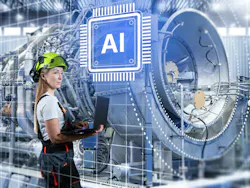
Artificial intelligence is becoming the nervous system for entire industrial ecosystems. From the University of Cambridge Institute for Manufacturing spinout Matta, teaching factories to optimize themselves in real time, to University of Manchester and Unilever’s AI-powered self-driving labs that make every failed experiment smarter and more sustainable, AI is accelerating discovery, scaling knowledge, and turning data into action faster than ever before. Initiatives like AVEVA and IMD’s industrial intelligence research, OpenAI’s Stargate-inspired domestic AI supply chain push, and the Eli Lilly–NVIDIA co-innovation lab with LillyPod highlight a new shop floor where reliability, production, and innovation are inseparable from digital twins, continuous learning systems, and ecosystem-wide coordination.
Learn more: Test your knowledge of The Industrial Science Report.
Quiz: What's driving materials development in the automotive industry?
Need to study? Read the article.
For manufacturers, maintenance engineers, and reliability teams, the practical challenges will be keeping complex equipment, supply chains, and production systems running at peak performance in an era where AI-driven insights can make or break uptime, efficiency, and even national competitiveness.
These stories collectively show that whether it’s detecting a subtle surface defect on a factory line, scaling chemical processes sustainably, or enabling precision medicine at speed, AI is becoming the infrastructure that lets industrial operations think, learn, and improve themselves. We’re only just beginning to see the possibilities.
Cambridge AI spinout Matta targets factory productivity and sustainability
In many plants, performance still depends on skilled operators who instinctively know how to fine-tune equipment for any given situation. This AI software platform from the University of Cambridge is targeting that gap between what factories can observe and what they can act on in real-time. Matta’s ambition is to give factories the much sought-after autonomy, or the ability to see, understand, and improve themselves in real time. Its platform captures defects, traces root causes, and enables corrective action, while scaling the kind of tacit, experience-based knowledge that typically lives only in skilled operators’ heads.
Anomalies translate into action on the plant floor, and the platform can feed them into existing workflows. As Sebastian Pattinson, associate professor of the department of engineering, University of Cambridge, explains, “Matta is designed to operate as a standalone layer on top of the factory, which customers value because it avoids the need to rip out or deeply integrate with existing systems and enables rapid time to value.” That flexibility allows it to be applied across a wide range of industries and setups.
For maintenance and reliability, anomaly detection moves from passive monitoring into automated or semi-automated intervention. Pattinson notes, “In practice, anomaly events can either be managed within Matta itself or passed into existing plant workflows, whether that means notifying an operator, escalating a maintenance issue, or triggering a downstream action such as a work order.”
The detection capability also departs from conventional statistical process control (SPC) and rule-based vision systems. Instead of relying on predefined thresholds or labeled defect classes, the system learns directly from production conditions and adapts as they change. “Rather than relying on fixed metrics, thresholds, hand-written rules, or pre-labelled defect classes, it learns autonomously from the production process itself,” Pattinson says. This allows it to identify a broader and evolving range of issues earlier, including those that have not been explicitly defined in advance. In other words, you don’t have to know exactly what you’re looking for; the AI can find it anyway.
Just as important, the barrier to getting started is low, Pattison says. The platform is designed for rapid commissioning in brownfield environments, avoiding long data-labeling cycles and extensive upfront tuning. Pattinson says, “Installation is typically measured in hours, with model refinement taking days rather than months.” In one case, he says, the model achieved more than 99% defect detection accuracy from ten minutes of data. Real-time anomaly detection across entire production lines could mean earlier intervention on drift, fewer chronic defects, and tighter control over energy intensity per unit produced.
The University of Cambridge, Institute for Manufacturing (IFM)-based AI spinout Matta has raised $14 million to apply artificial intelligence to real-time factory optimization. Matta was founded on research from the University of Cambridge’s Institute for Manufacturing and today, is a fast-growing team with experience from MIT, Imperial, BBC R&D, Google X, and Microsoft. The AI platform can autonomously enhance productivity, quality, and resilience and reduce energy use and emissions. Its technology uses computer vision to automate quality control, detect anomalies, trace root causes, and recommend corrective actions across diverse manufacturing lines, including electronics, automotive, defense, and apparel. Matta’s platform enables live monitoring of every production stage. The AI system learns the physical rules of production and applies them directly on the factory floor, capturing tacit knowledge traditionally reliant on operator knowledge.
University of Manchester and Unilever develop AI-powered self-driving labs to accelerate chemical process innovation for sustainable manufacturing
Imagine a lab where the experiments run themselves, and every failed batch makes the next one smarter. University of Manchester researchers are developing a physics-guided AI system that help to prioritize the best experiments, cutting down on trial-and-error in chemical processing. A major change in how chemical processes are developed and scaled could have direct implications for more sustainable manufacturing.
What makes this approach viable beyond the lab is how it handles scale-up and real equipment constraints. As Dr. Dongda Zhang, lecturer in chemical engineering at The University of Manchester, explains, “The AI system first proposes the most informative experiments during process scale-up and then learns from the resulting data to understand how scale affects the process, including equipment operating limits and variability. As more data becomes available, the model updates its predictions and gradually improves its ability to recommend optimal operating conditions that are feasible for larger-scale equipment. This approach helps accelerate scale-up and process optimization while minimizing the number of expensive experiments required at pilot or industrial scale.”
For maintenance and reliability teams, the more immediate impact is visibility into process health. Zhang notes, “The AI can analyze real-time process data and extract key information related to process behavior and product quality,” often through soft sensors that estimate variables not directly measurable in real time. “These tools allow earlier detection of process drift or abnormal behavior and support predictive monitoring and control. Our team has developed and tested soft-sensor technologies across several industrial processes, and this work was recognized with the IChemE Hutchison Medal in 2023,” he adds.
The system is especially effective in complex or high-cost experimental environments, where learning efficiently matters most. Zhang explains, “AI-guided experimental design can identify the most informative experiments to perform, enabling researchers to learn about the system more efficiently and discover useful insights with fewer trials.” The approach can be applied to many reaction systems, but challenges remain, he says, when the chemistry is extremely complex with limited measurable variables.
The same AI framework can guide measurable sustainability gains. By building AI-driven digital twins of processes, manufacturers can identify operating conditions that reduce waste and energy use while maintaining product quality. As Zhang puts it, “These tools allow manufacturers to operate processes under conditions that minimize waste generation and reduce energy consumption, while maintaining consistent product quality. In addition, these tools can accelerate the development and scale-up of more sustainable technologies, such as biomanufacturing processes or greener chemical formulations.” From the lab to the shop floor, that means bringing environmentally improved processes and greener chemical formulations to industrial markets faster.
Researchers at the University of Manchester, in collaboration with Unilever, have developed AI-powered ‘self-driving’ laboratories to optimize chemical process innovation. The system uses physics-guided AI to select the most valuable experiments, reducing trial-and-error and cutting time, material use, and waste. By learning from every outcome, the AI refines models to predict optimal processes, enabling faster scaling of chemical production with sustainability in mind. The technology is applicable across consumer goods, pharmaceuticals, and broader industrial chemical manufacturing.
NVIDIA and Eli Lilly launch AI lab and supercomputer to accelerate drug discovery and manufacturing
In this Eli Lilly and NVIDIA collaboration, Lilly’s new supercomputer, powered by 1,016 Blackwell GPUs, is the core of a continuous learning AI lab that links digital models, wet labs, and manufacturing operations in real time. For maintenance and reliability teams, using digital twins and real-time monitoring to catch anomalies before they escalate reduces downtime and keeps high-demand drug production running smoothly.
Instead of just fine-tuning public AI models built from widely available data, Lilly has the potential to build powerful models using its own internal data. Some of these models will be available on Lilly TuneLab, an AI/machine learning drug discovery platform created to expand access to advanced discovery tools across the biopharma ecosystem.
To support scaling Lilly’s capacity to manufacture high-demand medications, supercomputer-powered digital twins will test and fine-tune supply chains and make more informed supply chain and production decisions. It may also power robotics that help with production tasks, as well as real-time monitoring.
NVIDIA and Eli Lilly are investing $1 billion to create a co-innovation AI lab in the San Francisco Bay Area, paired with Lilly’s new supercomputer, LillyPod, powered by 1,016 NVIDIA Blackwell GPUs. The initiative combines Lilly’s pharmaceutical expertise with NVIDIA’s AI and accelerated computing capabilities, pioneering robotics, physical AI, digital twins, and a continuous learning system that links wet labs and computational dry labs. LillyPod enables faster experimentation, deeper biological insights, and real-time monitoring of manufacturing operations, supporting high-demand drug production while enhancing precision, efficiency, and supply chain resilience. The lab and supercomputer also explore AI applications across clinical development, manufacturing, and commercial operations, leveraging multimodal models and scientific AI agents to improve decision-making and scalability. Together, these efforts aim to redefine the pace of innovation in medicine, combining decades of Lilly’s internal data with advanced AI to deliver treatments faster and more sustainably.
AVEVA and IMD collaborate to explore industrial intelligence in connected business ecosystems
In the AVEVA initiative around industrial intelligence, the focus shifts from optimizing individual assets, processes, or experiments to orchestrating entire ecosystems, where AI, data, and human expertise are integrated to drive decisions across the value chain. For maintenance and reliability teams, fewer isolated insights and more context helps them understand how upstream suppliers, energy systems, and downstream operations all influence asset performance and risk.
What stands out to me is how this reframes reliability as an ecosystem problem, not just an asset or a process one. As AI begins managing not just machines but relationships—across partners, energy systems, and circular supply chains—the ability to anticipate failure and manage risk becomes inseparable from how well those ecosystems are connected and understood.
AVEVA and IMD Business School have partnered on a research collaboration to study how industrial intelligence can capture value from connected business ecosystems. According to AVEVA, industrial intelligence is made up of three things: data-driven insights, enhanced by AI, along with human expertise. The project will investigate how AI and data-driven tools improve operational efficiency, process optimization, and supply chain integration across industries, such as discrete manufacturing, consumer products, life sciences, and energy. The research will focus on leveraging digital twins, industrial analytics, and connected systems to enhance productivity, decision-making, and innovation within industrial networks. This collaboration combines AVEVA’s industrial software expertise with IMD’s management research capabilities, aiming to generate actionable insights for digital transformation in manufacturing and industrial sectors.
OpenAI calls to U.S.-based critical components and systems manufacturers for the AI ecosystem to maintain U.S. leadership in AI technology
AI doesn’t run on semiconductor chips alone. The vast infrastructure of physical components that support the entire ecosystem are just as important to scaling AI as the compute hardware itself. Power systems, cooling, gearboxes, motors, power electronics, tooling, robotics, and more are what bring AI to life at scale.
For manufacturing, and especially for maintenance and reliability, the uptime of data centers, the precision of power electronics, and the reliability of cooling systems aren’t support functions anymore; they are the AI supply chain.
I keep coming back to a theme across The Industrial Science Report: whoever controls the industrial base controls how fast innovation scales. With efforts like OpenAI pushing toward a 10-gigawatt buildout and the domestic production of critical components, reliability engineers are being pulled into something bigger than plant performance. Ensuring that the infrastructure behind AI is stable, secure, and built close enough to home could become a matter of national security.
This RPF follows on the launch of OpenAI’s Stargate Initiative (also called the Stargate Project), a massive U.S. public–private effort to build the physical infrastructure needed for next generation artificial intelligence. Structured as a joint venture led by OpenAI, SoftBank Group, and Oracle, with investment firm MGX, it was announced at the White House in January 2025 and aims to invest up to $500 billion in AI data centers and related systems by 2029.
OpenAI has launched a new Request for Proposals (RFP) aimed at strengthening U.S.-based manufacturing across critical parts of the AI supply chain, including data center hardware, consumer electronics, and advanced robotics components. The initiative seeks manufacturers, suppliers, and partners who can build modules, tooling, assembly systems, and essential inputs like gearboxes, motors, cooling systems, networking gear, cabling, power systems, and power electronics to accelerate AI infrastructure deployment. By expanding domestic production capabilities, OpenAI aims to shorten supply timelines, enhance resilience, and maintain U.S. leadership in AI technology. This effort also supports broader reindustrialization by modernizing facilities, creating skilled jobs, and integrating advanced production practices. The deadline to submit a proposal is June 2026, and proposals are reviewed on a rolling basis.
About the Author

Anna Townshend
managing editor
Anna Townshend has been a journalist and editor for almost 20 years. She joined Control Design and Plant Services as managing editor in June 2020. Previously, for more than 10 years, she was the editor of Marina Dock Age and International Dredging Review. In addition to writing and editing thousands of articles in her career, she has been an active speaker on industry panels and presentations, as well as host for the Tool Belt and Control Intelligence podcasts. Email her at [email protected].