The Industrial Science Report: Inside pharma’s workforce, process, and precision transformation
Key Highlights
- Diversifying vaccine manufacturing capacity is crucial for global health resilience.
- The North Texas biomanufacturing training hub aims to develop skilled talent and support regional innovation.
- Purdue’s catalysis research simplifies complex drug synthesis, enhancing safety and scalability.
- Reducing monoclonal antibody manufacturing costs can make these therapies more accessible worldwide, especially in resource-limited settings.
- Magnetic microrobots for targeted drug delivery demonstrate promising precision in clinical applications.
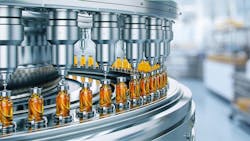
Pharmaceutical manufacturing is undergoing a shift in the name of global health. It's generally a system optimized for efficiency in a few regions, but it really needs to be one that must deliver resilience and scalability everywhere. This week’s edition of The Industrial Science Report traces that transformation, as global efforts diversify vaccine production and reduce dependence on fragile supply chains, workforce and training hubs close persistent skills gaps, and process innovations make drug chemistry safer, biologics more affordable, and future therapies more precise.
Together, the research highlights a common theme: pharmaceutical scientific discovery means nothing to patient outcomes without manufacturability and global access to medicine. For big pharma manufacturers, maintenance leaders, and reliability engineers, tomorrow’s competitive advantage may not be built on just what can be discovered in the lab, but on what can be built, run, maintained, and scaled around the world.
CGD research highlights challenges and priorities in diversifying global vaccine manufacturing
The biggest bottleneck in vaccine manufacturing isn’t necessarily about the science. It’s about building manufacturing capacity where it’s needed most to treat diseases. CGD’s analysis frames biomanufacturing resilience as a systems problem involving regulation, supply chains, financing, and skills challenges. For manufacturers, this highlights a growing demand for standardized production platforms that can be maintained and validated across regions. For reliability engineers in emerging markets, diversification means designing processes and asset management for uneven infrastructure, variable utilities, and workforce experience gaps.
The Center for Global Development (CGD), an independent, non-partisan think tank working to reduce global poverty, published insights identifying six major takeaways from its research on diversifying global vaccine manufacturing capacity. Its blog underscores the persistent challenges in establishing equitable, geographically distributed vaccine manufacturing infrastructure, including regulatory bottlenecks, supply chain constraints, financing gaps, and political headwinds. It emphasizes policy and investment strategies to strengthen local production, incentivize technology transfer, and support workforce training in bioproduction across low- and middle-income regions. Manufacturing diversification is critical to global health resilience to reduce the dependency on a limited number of producers and improve rapid response capacity for future pandemics.
North Texas biomanufacturing training hub opens to strengthen workforce and innovation
A biomanufacturing plant is only as reliable as the people running it, and the U.S. industrial talent pipeline has been a persistent single point of failure. This new North Texas training hub wants to tackle workforce development and manufacturing infrastructure together. Translational research, which bridges science with real-world applications, helps reduce startup risk, shortens commissioning timelines, and improves long-term asset reliability in highly regulated bioprocess environments. For maintenance and reliability teams, better trained operators upstream mean fewer deviations, cleaner changeovers, and more predictable plant performance downstream.
The University of Texas at Arlington (UTA) and the Texas A&M Engineering Experiment Station (TEES) inaugurated the National Center for Therapeutics Manufacturing satellite campus (NCTM2) at Pegasus Park in Dallas, establishing a new biomanufacturing training and research hub. The facility will provide hands-on training, advanced laboratory space, and support services for students, industry partners, and biotech startups to accelerate translational research and workforce development. The hub is a joint effort between UTA’s Institute for Biomanufacturing and Precision Medicine of North Texas (IMPRINT) and TEES, designed to help move innovations from concept to market while addressing regional talent needs. By expanding domestic biomanufacturing capabilities, the center is positioning North Texas as a leader in producing vaccines, therapeutics, and other biopharmaceutical products.
Read more about workforce development for manufacturing:
- The Industrial Science Report: Building the manufacturing workforce behind national security
- The Industrial Science Report: Manufacturing technologies and skills powering semiconductor fabs
New catalysis research enhances pharmaceutical manufacturing efficiency
If a blockbuster new drug depends on expensive or risky chemistry, manufacturing scale-up becomes the weak link. Purdue’s catalysis research simplifies how complex drug molecules are made, directly improving safety and yield at scale. For maintenance teams, safer chemistries often translate into reduced corrosion, fewer unplanned shutdowns, and less exposure to high-energy operating conditions.
At Purdue University, chemist Christopher Uyeda is developing new catalytic reactions and catalysts, substances that accelerate chemical reactions, intended to make structurally complex pharmaceutical intermediates easier and safer to manufacture. His research focuses on designing catalysts that use readily available metals like cobalt and nickel to generate reactive intermediates from stable precursors. This new process reduces reliance on high-energy reagents and improves safety profiles in drug production. One of Uyeda’s reactions is already incorporated into Pfizer’s commercial manufacturing process for Paxlovid, one of the first treatment for COVID-19 initially authorized by the FDA in December 2021. Uyeda’s work also supports Purdue’s broader One Health initiative, which integrates research across human, animal, and environmental health. These advances in catalyst design and reaction development could reduce costs and enhance scalability for existing and future medicines.
University of Delaware, Penn State, and global partners tackle cost-effective monoclonal antibody manufacturing
When you catch a cold, your natural antibodies jump into action to block and neutralize the virus. Monoclonal antibodies (mAbs), powerful manufactured antibodies, can perform a similar feat, targeting harmful cells with precision. Therapies with mAb are widely available in the developed world for fighting infectious diseases, cancers, and autoimmune disorders. However, manufacturing complexity and costly raw materials make them cost prohibitive in low- and middle-income countries.
At $10 per gram, monoclonal antibodies stop being luxury medicines and start becoming true global therapeutics. Membrane-based purification approaches promise smaller footprints, faster changeovers, and fewer process interruptions compared to traditional chromatography, which separates a mixture into its components.
Andrew Zydney, director of Membrane Applications Science & Technology (MAST) Center at Penn State and member of the mAbs research team, says, the overall objective of the Gates Grand Challenge is to reduce manufacturing costs of the production of mAb products, with a specific focus on anti-malarial antibodies. “Our work is focused on the development of a continuous manufacturing process that incorporates single-use bioprocessing equipment and avoids the need for expensive Protein A chromatography columns. In addition, we plan to leverage advances in process analytical technology and digital twins for automation and process control,” Zydney says.
A multidisciplinary research team led by the University of Delaware with participation from Penn State, industry partners, and National Institute for Innovation in Manufacturing Biopharmaceuticals (NIIMBL), has secured a three-year, $10.5 million award from the Gates Grand Challenges Program to lower the cost of monoclonal antibody (mAb) manufacturing globally. NIIMBL, a public-private partnership of more than 200 organizations, includes industry, academia, and government partners. Other key partners on the project include researchers from the Sartorius, Rensselaer Polytechnic Institute, Enquyst Technologies, Michigan Technological University, and University College London. Penn State’s contributions focus on improving purification processes through membrane technologies to remove host cell proteins and potential contaminants more efficiently, which is critical for cost-effective production. By re-envisioning upstream cell culture and downstream purification processes, the team seeks to reduce manufacturing costs toward the challenge goal of “$10 per gram,” making mAbs more accessible worldwide. The collaboration integrates expertise in bioprocessing, economic modeling, and manufacturing to test new approaches that could serve as practical models for industrial mAb production.
Precision magnetic microrobots for targeted therapeutic delivery in clinical settings
Many drug delivery systems are manufactured for blunt-force distribution, meaning you flood the body with medicine to get it quickly to one specific place. Instead, this research uses medicinal microrobots for targeted delivery. So far, they have tested it successfully in pigs and sheep, and the next step is human clinical trials. For manufacturers, this type of product would need ultra-clean, highly repeatable microfabrication and assembly processes. For reliability engineers working in pharmaceuticals, even minor process drift could compromise performance, which could be balanced with advanced condition monitoring, validation, and contamination control.
Researchers at ETH Zurich have developed clinically ready magnetic microrobots that can deliver drugs precisely to specific targets within the body, significantly improving localization versus systemic dosing. These microrobots incorporate a soluble gel capsule with iron oxide nanoparticles for magnetic control and tantalum for X-ray visibility. This balances the trade-offs between size, magnetic responsiveness, and imaging. A modular electromagnetic navigation system—combining rolling, gradient pulling, and in-flow strategies—accurately steering through complex vascular environments and even against blood flow. Tests using realistic vessel models and large animal studies showed more than 95 percent delivery success, supporting potential future human clinical trials.
About the Author
 Anna Townshend
Anna Townshend
head of content
Anna Townshend is the chief editor and head of content for Plant Services. She has been a journalist and editor for more than 20 years and joined Plant Services and Control Design as managing editor in June 2020. Previously, for more than 10 years, she was the chief editor of Marina Dock Age and International Dredging Review. In addition to writing and editing thousands of articles in her career, she has been an active speaker on industry panels and presentations, as well as host for Great Question: A Manufacturing Podcast. Email her at [email protected].