8 maintenance and reliability takeaways from Honeywell User Group (HUG) 50th anniversary conference
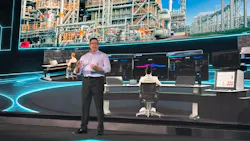
As Honeywell Process Automation celebrated the 50th anniversary of the Honeywell User Group (HUG) conference in Phoenix, executives highlighted the evolution of industrial automation and outlined what they believe will define the next era of process operations.
The anniversary event coincided with another major transition for the company. Honeywell announced its evolution into Honeywell Technologies, a pure-play automation company focused on three primary markets: buildings, industrial applications, and process industries. Honeywell identified six strategic growth areas: core energy, liquified natural gas (LNG), life sciences, grid capabilities, manufacturing, and mining.
Fifty years ago, processing plants depended on large numbers of workers manually operating valves and monitoring analog control panels. The introduction of distributed control systems transformed those operations, driving automation and more consistent operations.
"That shift set a wave in motion of automation technology that carries us forward to today, improving safety, increasing plant capacity and utilization, and delivering enormous value through higher throughput and yield," said Jason Urso, chief technology officer at Honeywell.
The focus over the last five decades has largely been on automating equipment, but the next phase will be about augmenting human expertise, preserving operational knowledge, predicting failures before they occur, and ultimately, reducing variability across operations.
I attended HUG as part of the EndeavorB2B editor team tasked with writing the show’s daily enewsletters for our sister publication Control. You can check out our full stories here, but I tried to do double duty and listen to sessions for Plant Services readers too. So, for maintenance and reliability professionals, here are eight key takeaways from HUG’s opening day keynotes.
1. Process industries are moving from reactive maintenance to predictive operations.
"I always wondered why there's no DCS [distributed control system] for maintenance." — Vimal Kapur, chief executive officer of Honeywell.
When visiting plants as a young engineer, Kapur wondered why maintenance didn’t have a DCS-like system, to assist maintenance like control systems aided operations. Instead, maintenance was left to root out the causes of failures across complex architectures. Nothing was centralized for maintenance, but that is very much changing. Honeywell executives described its customers’ shift away from traditional run-to-failure service models toward predictive approaches, being pushed further than before through enhanced connectivity and analytics. The combination of cloud infrastructure, contexualized data, and AI give operations and maintenance visibility into asset health before failures occur.
For maintenance teams who haven’t started moving the needle from reactive work toward proactively preventing issues, it’s an opportunity to prioritize work based on risk rather than calendar intervals. And companies like Honeywell have many tools that can help. The future of reliability is far beyond predictive maintenance, where AI, cybersecurity, and asset intelligence live together in a single operational ecosystem.
"We are moving from more reactive to a truly predictive maintenance paradigm." — Vimal Kapur, chief executive officer.
2. AI may become the industry's answer to the retirement wave.
"Those operators, those technicians, those maintenance people acquired so much of knowledge in 20 to 30 years. That knowledge was not documentable." — Kapur
An important industrial use case for AI will be capturing that institutional knowledge before it disappears. As experienced operators and maintenance technicians retire, decades of expertise and knowledge often leave with them. Historically, much of that knowledge was never formally documented.
Honeywell said AI agents will help capture that expertise, turn it into useable guidance, and deliver it directly to workers when they need it most. Rather than replacing workers, Honeywell said these systems are intended to elevate workforce capability by helping less experienced personnel make decisions with the benefit of historical knowledge and proven best practices. For organizations facing workforce shortages, this approach could accelerate onboarding and improve consistency across shifts.
For a long time, the workforce issue in manufacturing has been framed as a recruiting issue, but that’s transitioning more to a skills issue. Yes, automation and AI will change the workforce. It will replace some worker tasks but won’t replace the tech-savy workers that effectively upskill. The conversation is also about knowledge continuity and how organizations preserve expertise and make it accessible to the next generation of workers. AI agents are Honeywell’s answer to preserving that knowledge and producing it in real-time when it’s needed most.
"[An AI agent] makes expert knowledge easy to capture, validate, and reuse, so it doesn't walk out the door." — Peter Davis, senior director engineering, process automation at Honeywell.
"A human is still in the loop, but the knowledge is being captured now by the system." — Kapur
3. AI agents make every operator the best operator.
"This is about supporting human decision making through real human autonomy teaming." — Graeme Laycock, director user experience, process automation at Honeywell.
Honeywell still sees humans as central to decision-making in high-risk environments, where the goal is augmentation rather than replacement. But AI may help preserve expertise that would otherwise be lost, making that knowledge available to every shift and every site. To that end, Honeywell introduced Experion Cognition, an AI-enabled platform designed to help operators make decisions using historical knowledge and real-time analytics. The system provides recommendations during routine operations and abnormal situations, with the goal of reducing variability caused by differences in experience levels.
"Instead of dealing with a flood of alarms, [operators] can respond with clarity to the overall situation." — Graeme Laycock, director of user experience, process automation.
Honeywell also shared examples from its field trials in which AI agents detected sensor malfunctions and emerging process disturbances before they escalated into more serious events. This helps operators focus on responding to the overall situation rather than sorting through large volumes of alarms.
One of the themes that has surfaced repeatedly in The Industrial Science Report is that AI is moving from an add-on application or software layer to embedded technology supporting the core of the industrial system. In this reality, future reliability will depend on how well physical assets and processes support AI. Across semiconductor manufacturing, energy, and supply chain operations, organizations are using AI to recognize patterns and emerging risks that traditional rule-based systems may miss.
"It doesn't just replace operators; it makes every operator your best operator every shift." —Laycock
4. Reliability is expanding beyond the maintenance department.
"Process decisions directly affect equipment health." — Anand Vishnubhotla, chief technology and software portfolio officer, process automation at Honeywell.
"This is about shifting plants from reacting to events to operating with intent." —Vishnubhotla
Operational decisions and asset health have always been interconnected, but technology is giving us a better view into that connection. Honeywell also introduced Plant Cognition, which extends the Experion Cognition concept into planning, maintenance, and asset performance management. Executives demonstrated how process models, equipment knowledge, and AI insights could work together to identify risks and optimize decisions on the plant floor. Reliability professionals gain access to tools designed to evaluate how operational changes may affect equipment condition, and Honeywell executives asked, what if your plant could think with you?
"What if [your plant] could do that before something broke, plugged, fouled, or quietly lost you money?" — Isabel Chan, director offering management, process technology at Honeywell.
5. Connected data is essential to reliability.
"The public clouds are not designed for the industrial environment." — Kapur
Data infrastructure is essential to achieving predictive capabilities. Many of Honeywell's new products depend on a cloud foundation to securely connect industrial assets and contextualize operational data, so Honeywell has invested almost $1 billion over the last six years in the Forge platform, which is the cloud platform underpinning many of its other offerings. The company argued that industrial environments require purpose-built cloud architectures capable of securely handling operational technology data.
The growing emphasis on the digital infrastructure needed to support AI is also a reoccurring theme that I’ve reported on. Advanced analytics requires more than sophisticated algorithms; it also depends on a reliable data pipelines and secure connectivity. Honeywell's emphasis on purpose-built cloud environments reinforces this idea that AI only delivers value when organizations can securely connect, contextualize, and act on operational data.
“Once we are able to connect our customers through the cloud, we are able to provide a real time understanding on how the control system infrastructure is working and what can be done to keep it up and running all the time.” — Kapur
6. Reliability teams need an enterprise-wide view of assets.
"Maintenance is still driven by manual checks, spreadsheets, and tribal knowledge that was maintained by a workforce that no longer exists." — Elena Mayor, senior director offering management, process automation.
Reliability teams increasingly need enterprise-wide visibility into asset health and lifecycle status. Honeywell Digital Prime, built on Honeywell Forge, is providing that visibility. It combines asset inventories, migration planning, lifecycle management, and cybersecurity into a single environment. Digital Prime connects data across sites and systems, giving control system maintenance an enterprise-wide view of assets. Honeywell executives said the platform can help organizations reduce reliance on manual audits and improve planning accuracy. Real-time inventories data and visibility into obsolescence could also support better investment decisions and reduce operational risk.
“Honeywell Digital Prime bridges the gap with a proactive approach. You see what you have, you understand health and risk, and you standardize how issues are detected and resolved.” — Mayor
7. Cybersecurity is becoming inseparable from reliability.
"Everyone can be a hacker with today's modern AI tools at their disposal." — Urso
Cybersecurity risk in manufacturing is accelerating as operational technology (OT) environments become more connected, more software-defined, and increasingly similar to information technology (IT) systems in terms of complexity. This expansion of the attack zone is turning cyber exposure into a direct reliability risk. Honeywell introduced Cyber GRC as a compliance-focused platform intended to continuously evaluate systems against multiple standards. Cybersecurity used to be about compliance and now it’s more tightly linked to uptime and asset performance.
"With this explosion in connectivity, managing vulnerabilities has become incredibly complex." — Jason Urso
8. Autonomous operations have moved from concept to implementation.
"The control room of the future is here, and it's real." — Peter Davis, senior director engineering, process automation.
Autonomy is beginning to transition from experimentation into production environments. The opening keynotes outlined autonomy as moving from deterministic automation toward agent-driven, situation-based decision support. In a later session focused on reliability and maintenance operations, that same concept was viewed through a narrower reliability lens: how autonomous systems begin to reshape day-to-day asset management, from condition monitoring and alarm response to maintenance prioritization and execution workflows.
The move from stand-alone machines to flexible, intelligent systems is a theme I’ve reported on extensively. Optimization of individual assets is expanding into coordinated industrial systems, all linking AI, automation, and robotics into decision networks rather than isolated machine performance. Honeywell’s new product offerings are showing how industry moves from ‘How do we optimize this piece of equipment?’ to ‘How do we optimize the interactions among equipment, people, processes?’
"In November of last year, the first ever autonomous controller, literally running a petrochemical facility with no operator intervention, driving increased outcomes through this system." — Jim Masso, president and CEO, process automation.
https://www.plantservices.com/industrial-science-report/article/55357183/the-industrial-science-report-advanced-robotics-exoskeletons-and-ai-accelerate-industrial-automation-at-scale
Final thoughts: Reliability in AI-connected era
One theme that emerged repeatedly throughout the keynote sessions was that reliability is expanding beyond the maintenance department. Whether the discussion centered on operator decision support, cybersecurity, enterprise asset visibility, or cloud infrastructure, reliability increasingly depends on how well organizations manage the connections between people, assets, and data. Thanks to AI, that’s getting easier and more complicated at the same time, at least in the beginning.
Honeywell's vision and new product lineup help manage the AI challenge of moving from standalone analytics into the operational fabric of industrial systems. Performance will depend not only on model sophistication, but on the quality of connectivity, context, and operational data flowing through the organization.
The next generation of maintenance and operations may depend less on any single technology and more on how effectively organizations orchestrate decisions across systems. For reliability leaders, that could mean expanding the definition of reliability itself. Reliability becomes less about keeping equipment running in isolation and more about ensuring the entire operational system (data, workflows, expertise, and assets) works together.
About the Author
 Anna Townshend
Anna Townshend
head of content
Anna Townshend is the chief editor and head of content for Plant Services. She has been a journalist and editor for more than 20 years and joined Plant Services and Control Design as managing editor in June 2020. Previously, for more than 10 years, she was the chief editor of Marina Dock Age and International Dredging Review. In addition to writing and editing thousands of articles in her career, she has been an active speaker on industry panels and presentations, as well as host for Great Question: A Manufacturing Podcast. Email her at [email protected].