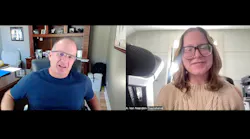
Podcast: How to prioritize maintenance work during a holiday shutdown





Joe Kuhn, CMRP, former plant manager, engineer and global reliability consultant, is now president of Lean Driven Reliability LLC. He is the author of the book “Zero to Hero: How to Jumpstart Your Reliability Journey Given Today’s Business Challenges” and the creator of the Joe Kuhn YouTube Channel, which offers content on starting your reliability journey and achieving financial independence. In our monthly podcast miniseries, Ask a Plant Manager, Joe considers a commonplace scenario facing the industry and offers his advice, as well as actions that you can take to get on track tomorrow.
This episode explores how to make the most of a holiday shutdown.
Below is an excerpt from the podcast:
AT: So for plants that use, say, the time at Thanksgiving or maybe those three or four days between Christmas and the New Year's holiday for a maintenance shutdown, this episode is for you. I suppose these tips would apply to any shutdown, but we're in the holiday season, and that does add an extra element to it, which we'll get to.
But I think let's start with talking about a plant that has a backlog of maintenance work orders. Several machines may need attention, and you've also got a production team that has a few improvement ideas of their own that they'd like to squeeze into that little window while the equipment is offline. So you want to make sure all the work is properly scoped and ready to execute. But maybe you're not really sure where to start or what to prioritize.
The maintenance team probably sees a chance to catch up, and production sees a chance to tackle all of those projects that they never get a chance to get to. And everyone would also like to enjoy some time at home on a holiday break.
So, Joe, where do we start when you're planning a holiday shutdown? What do you think about first, and how far in advance should the team be planning?
More Ask a Plant Manager episodes:
- Who owns maintenance decisions in a reliability-focused plant?
- What are the biggest maintenance shortcuts and why is culture to blame?
- Fact or fiction? The truth about reliability and what plant managers get wrong
- The warning signs of a broken reliability culture and how plant leaders can fix it
- Reliability reality check—why more PMs and high wrench time don’t guarantee reliability
- How to spot fake reliability programs and insights on maintenance execution and culture
- Maintenance vs. operations—Improving communication through shop floor accountability
- Unleash your planner—Turning overwhelmed maintenance planners into strategic leaders
JK: Yeah, great question, and a little bit difficult because you don't know whether these outages are 24 hours or two weeks, and I've seen everything in between as well.
So where do you start? It all starts with planning. I mean, you can't compensate for poor planning in an outage like this. You’ve got to take a look at your backlog, like you stated. What are the things that are out there that we know can bite us, and we've been putting off, putting off, putting off for reasons? What are the required PMs? Condition monitoring status is always important. So, have you found any anomalies out there?
Talk to the mechanics. Talk to the techs, all the technicians. Talk to the operators. Find out how big the apple is that you need to bite.
And then how long is the planned shutdown? That's big. Another one that's big, and I hate to say this, but how much are you willing to spend? I mean, that's major. If you’ve got 50 things you want to do, and it's going to cost you $2 million, and the plant manager says the budget's $500,000 or $50,000, that changes things.
So you’ve got to start with planning. Get your hands around the animal. How far in advance? There could be a lot of lead time on parts. I mean, I've had parts where there was a year lead time, so you need to start in advance.
There also could be some more complicated coordination. Maybe you need a 100-ton crane, and you’ve got to get that here. Maybe there's coordination between electricians, mechanics and operators who may need to clean up the equipment. So all that factors in.
Maybe you want to do a dry run. Maybe you’ve got a three-day window and you’ve got to stuff in five days' worth of work. Well, one of the ways to do that is try to optimize the shift changes, what problems can come up, and you may be able to get that into three days because you did a dry run of that.
A lot of factors go into starting early. You'll never be disappointed for starting early. I'll say that.
AT: Any project, right?
Well, let's talk about the backlog and how you prioritize that. So, what if a plant has several competing priorities? How do you decide what jobs make that shutdown list? What information do you need to prioritize the work based on, equipment condition, risk, production impact? Are there other factors to consider also? What do you think?
JK: What we always started with is something called asset criticality, and maybe that's a new term for you. It's basically looking at the impact of a failure times the probability.
So we had a scale of one to 10 for impact, with 10 being bad. It's bad if it happens. And one to 10 for probability. Ten means high probability of having a failure.
We have that on all of our assets. You have some assets that could be 10 times 10, or 100, and some assets could be three times three, or nine. And you really wanted to look at those high asset criticalities because they may have a massive impact on production, maybe a safety issue, environmental issue, maybe a high cost, all those kinds of things.
So, man, asset criticality. If you're not doing it, you're making a mistake. You're relying on people's opinion and mood at the time. Let's convert that to numbers, okay?
Another thing to factor in is expertise availability. If you have a very complex job you're going to want to tackle, and your expert is not available, do you really want to tackle it then? Do you really have the expertise? You don't want to just complete the work. You want to do it with precision and expertise, right? And you want it to start up on time. So, is there a special skill that is missing or not?
And then you got to look at your manpower. What's available? It is the holidays. I don't know what the culture is in your plant. In my plants, we always ran 365 days a year. That was just the nature of the aluminum business, is we ran all the time, so manpower and maintenance typically knew that they were going to be here.
But do you need to supplement that with a contractor? And it all comes down to cost again.
We prioritize. Are there safety issues, environmental issues? Those needed to get done. Are there quality and cost issues that we wanted to attack? There you go. So, willingness to spend, and a lot of times it really comes down to dollars.
Okay, I appreciate you want to get these 10 things done, Anna, but here's your budget, and that's just like your car. We use the car analogy. When you take your car into the shop, the mechanic, the technician says you need to fix these seven things, and you may say, "I can only afford six right now." That's very common, and it's real.
AT: Right. What's your budget?
I suppose even with all the best planning, sometimes teams are still going to run into problems. Nothing's always going to run perfectly. What are the most common reasons shutdown maintenance takes longer than expected, and how much of the work should be planned and ready to go before the shutdown starts?
JK: Well, the easy one is how much of the work should be planned: all of it. Okay, but I'll go back to what causes problems, delays. Okay, I call it discovery work. Number one is discovery work. You were planning on changing out a pump, and then all of a sudden, ‘oh my gosh, the base plate is damaged, the foundation is damaged. We got to put in new anchor bolts. We got to do all this work.’ That discovery work really is the wild card.
Okay, and so what do you do about that? Well, maybe you can have a mini outage. Say it's two hours to take a really good look at what work you're going to do, a little pit stop, and minimize the amount of discovery work that is just a big surprise on Christmas Eve. We don't like maintenance reliability surprises on Christmas Eve, so discovery work is by far the largest. But there's a lot of things you can do about it. Don't be surprised. Okay, what can you do not to have discovery work?
Another problem is the wrong part, and there's no excuse for that. Did you verify the part is correct? Is the right shaft diameter, the right footprint, the right bolt pattern? Is everything correct? Did you have a knowledgeable person look at the part, or did it just get delivered? That delivery does not mean it's the right part.
And then, the other thing is poor planning. I believe a planner not only scopes out the work and gets the parts ready and schedules things. They also anticipate what can go wrong. Okay, what can go wrong, and have some of those things already solved in advance. Maybe it's an extra forklift, an extra crane. Maybe it's an extra person. I don't know what it is, but anticipate what can go wrong. No excuse for not doing that.
Now, one thing I want to note, Anna. There's my list of problems. Notice I did not say the technicians. I've never found the technicians' lack of skill or anything like that to be the problem. Never. Okay, cross that off your list. It's most likely discovery work, wrong part, poor planning.
AT: Better planning. I also like that idea of the dry run, doing a practice or really digging into discovery work ahead of time to try and figure out, what you can do before that clock even starts ticking.
JK: Absolutely.
AT: Okay, so for some plants, a holiday shutdown means that a lot of the workforce might get to go home, while teams like maintenance are still there working on the equipment. Some plants may stagger their schedules, or I think you even suggested earlier bringing in contractors.
Either way, some people may still be giving up holiday time while everyone else is celebrating. So, how should plant leaders approach staffing and scheduling for a holiday shutdown? What can they do to make the workload fair, recognize those who are giving up time off, and sort of keep morale from taking a hit during the holidays?
JK: Yeah, this is an area where I have a little bit less expertise, to be honest. But to me, the steps are: start communicating early. In early November, you're communicating, "Hey, this is what's going to be happening over the Christmas break, those five days or whatever it happens to be." Get the word out there early. Let some people, get their lives situated around that.
Actually, I really love volunteers. Maintenance people, they love working on equipment. They love fixing equipment, and I really haven't had too much of a problem getting people to volunteer. I'd rather have a volunteer for a 12-hour shift than, have somebody say, "Sorry, you're scheduled to work." And, I'd rather have somebody want to be there.
One of the tricks we used is to put everybody on a 12-hour shift. Instead, you have only one shift change, and it takes two people to do that instead of three on an eight-hour shift. You gain some efficiencies doing that, and the people who want to work are getting the work, and they're getting some overtime.
If you need contractors, better to notify them to get that in advance and make sure. Say, "Okay, guys, you're sure nobody wants to work during this time? I'm guaranteed I can get a contractor to do that." I don't like to do that; they don't have the expertise of our specific equipment. But early planning is the key. Early communication is the key, and get a feel for, who's wanting to work that time period, and find out if it's, 100% of people or 10%, and then go from there.
And then you have to decide if you want to do it. Then, if you’ve got to go contractor, sometimes that's more expensive, and you could have more problems with that. So it's not an easy answer there.
But I think most people, if you're in the crafts, you're used to holiday shutdowns. Okay, this is not really a new problem.
AT: Right. I was surprised by the idea of volunteering. I wouldn't think that would work, but I guess some people probably want that overtime. I just think of the airline when you're sitting at the airport and they want volunteers to stay after the flight, and no one wants to take it. Yeah, the workers do a better job of that.
JK: Volunteers, I mean, it's overtime. It's holiday expenses, right? January and February are going to come for that VISA bill, right? So overtime and volunteers have never really been a problem in my plants.
AT: So a successful shutdown needs early planning, well in advance. You want to prioritize the work that matters most. You pointed toward asset criticality as a key for that, and really making sure that the people and the resources and everything that you need are ready well before that clock starts ticking. There are team members who are giving up their holiday to get work done, and plant leaders need to think about that in terms of staffing and team morale as well.
JK: Yeah, I think one of the keys I'd like to focus on here is you can have mini-outages ahead of time. That may be one hour, two hours to go after that discovery work, and then a planner needs to anticipate problems. Anticipate problems. Most of the time, when we had an outage go a day long or something like that, I'm telling you, it's something we should have seen.
AT: Definitely go after that discovery work early and get what you can get done. Yeah. All right. Well, that'll do it for this episode, Joe. Thanks for joining me. I hope you have a wonderful Thanksgiving with you and all your grandchildren.
JK: All right, you too. I had a great conversation today. Thank you.
About the Podcast
Great Question: A Manufacturing Podcast offers news and information for the people who make, store and move things and those who manage and maintain the facilities where that work gets done. Manufacturers from chemical producers to automakers to machine shops can listen for critical insights into the technologies, economic conditions and best practices that can influence how to best run facilities to reach operational excellence.
Listen to another episode and subscribe on your favorite podcast app
About the Author
 Joe Kuhn
CMRP
Joe Kuhn, CMRP, former plant manager, engineer, and global reliability consultant, is now president of Lean Driven Reliability LLC. He is the author of the book “Zero to Hero: How to Jumpstart Your Reliability Journey Given Today’s Business Challenges” and the creator of the Joe Kuhn YouTube Channel, which offers content on creating a reliability culture as well as financial independence to help you retire early. Contact Joe Kuhn at [email protected].
 Anna Townshend
head of content
Anna Townshend is the chief editor and head of content for Plant Services. She has been a journalist and editor for more than 20 years and joined Plant Services and Control Design as managing editor in June 2020. Previously, for more than 10 years, she was the chief editor of Marina Dock Age and International Dredging Review. In addition to writing and editing thousands of articles in her career, she has been an active speaker on industry panels and presentations, as well as host for Great Question: A Manufacturing Podcast. Email her at [email protected].