When is tungsten carbide the right choice for industrial wear parts?
Key Highlights
- Choose tungsten carbide based on a wear part's failure mode, load conditions, and environmental factors rather than hardness alone.
- Assess whether wear, deformation, or dimensional drift limits component life.
- Consider application-specific factors such as impact, bending, thermal shock, and corrosion when selecting carbide grades.
- Implement a structured RFQ process that includes failure documentation, operational success criteria, and manufacturing planning.
- Use carbide selectively at wear surfaces or critical areas to balance wear resistance with toughness and cost.
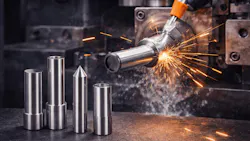
Every maintenance team has components that seem to consume a disproportionate amount of time and budget. Guides wear out too easy, or valves drift out of tolerance. When those failures become routine, sometimes the conversation turns to materials. Would a harder material solve the problem? Replacing steel components with tungsten carbide, known for exceptional wear resistance, might solve the problem, but it’s not the right answer for every application. The right choice depends more on how the part is failing, rather than material hardness alone.
A better question to ask is whether wear, deformation, or dimensional drift are the limiting failure modes, and whether the part can support a hard material without exposing it to excessive impact, bending, misalignment, or thermal shock. Under the right conditions, cemented tungsten carbide can be a powerful maintenance tool. When used in the wrong conditions, it can chip prematurely and turn a costly upgrade into a short-lived experiment.
Start with the failure mode, not the material
In industrial use, “carbide” commonly means cemented tungsten carbide: hard tungsten carbide particles held together by a metallic binder, often cobalt. The combination gives the material its useful balance of hardness, wear resistance, compressive strength, and toughness. The binder system, binder percentage, carbide grain size, geometry, finish, and service environment all influence how a finished component behaves. The core characteristics that drive carbine performance include:
- Hardness and abrasion resistance—Carbide resists scratching, grooving, erosion, and surface loss in abrasive contact.
- Dimensional stability—Carbide can hold geometry under load when steel parts deform, round over, or lose size.
- Heat and friction—Carbide can maintain functional hardness in hot or high-friction service where wear accelerates.
- Compression strength—Carbide is a strong fit for dies, forming tools, and wear components loaded in compression.
In order to choose the right material properties for the application in question, maintenance and engineering teams should start with the wear mechanism. Abrasion removes material through hard particles or rough contact. Erosion does similar damage through high-velocity solids or fluids. Sliding contact can round edges or enlarge clearances. Repeated impact can initiate chips or cracks. Corrosion can attack the binder and interact with mechanical wear. Heat, poor lubrication, contamination, and misalignment may accelerate more than one mechanism at the same time.
Carbide is usually strongest when the dominant demand is resisting abrasion or erosion, carrying compressive load, and holding geometry over many cycles. It is less forgiving than steel, when a design subjects the part to tension, bending, sharp impact, or unsupported edges. The grade of tungsten carbide also changes the balance of hardness, toughness, wear resistance, corrosion behavior, and grindability. To select the right grade, users should consider:
- Wear mode—Is the part failing from abrasion, erosion, edge wear, impact, corrosion, heat, galling, or a combination?
- Load and impact—Thin edges, unsupported lengths, interrupted contact, and shock loads can shift the choice toward tougher grades.
- Binder and grains size—Binder and grain structure affect hardness, toughness, corrosion response, and how the material behaves in grinding.
- Environment and finish—Temperature, coolant, chemicals, surface finish, and inspection needs should be part of the grade conversation.
Understand how parts are failing is key to choosing the right material. A steel guide that has gradually worn undersize is a different problem from a guide that bent because the assembly is overloaded. A punch with a polished wear land is a different problem from one that fractures after a misfeed. If the root cause is overload, misalignment, weak support, or an incorrect clearance, changing the material alone will not repair the system.
When carbide generally earns its keep
Carbide is most compelling when wear is both predictable and expensive. The purchase price of a component is only one line in the calculation. Maintenance teams should also count labor, planned or unplanned downtime, startup losses, scrap, quality drift, inspection time, inventory, and the risk that a worn part damages a mating component.
Typical candidates share one or more conditions:
- A steel or tool-steel component wears too quickly to meet the desired maintenance interval.
- Wear changes a critical diameter, clearance, edge, or flow opening before the component actually breaks.
- The contact is abrasive, erosive, repetitive, or heavily loaded in compression.
- Replacement requires a line stop, difficult access, extensive setup, or time-consuming realignment.
- Consistent geometry has downstream value in product quality, process capability, or inspection frequency.
In these situations, the objective is not merely “longer life.” It is a longer and more predictable service interval while the part continues to perform its function. A component that remains intact but drifts out of tolerance has still reached the end of its useful life.
Industries and components that use carbide most
Cemented carbide is established across metalcutting, mining and construction, and forming applications that experience abrasive contact, high cycle counts, pressure, and the need to retain a working shape.
Metalworking, stamping, and forming
Punches, dies, drawing tools, guides, bushings, rolls, inserts, and cutting-tool blanks are among the best-known carbide applications. In stamping and forming, gradual wear changes punch-to-die clearance, edge condition, hole size, and part consistency. Carbide can help a tool retain its working geometry through long production runs, especially when the work material is abrasive or the volume makes frequent sharpening and replacement disruptive.
The design still needs adequate support and appropriate edge preparation. Thin sections, abrupt corners, press misalignment, and slug-pulling events can create fracture risks that a harder grade cannot solve by itself.
Mining, construction, energy, and bulk-material handling
Rock, sand, mineral fines, ash, and other hard particles create severe abrasion in drilling, crushing, conveying, mixing, and pumping systems. Carbide appears in drilling and cutting inserts, nozzles, liners, sleeves, valve details, and other localized wear points. Applications with combined abrasion and impact require a deliberate toughness tradeoff; the hardest grade is rarely the only design objective.
Plants often gain more from placing carbide only at the active wear surface, rather than making an entire assembly from carbide. A supported insert, tile, sleeve, or replaceable tip can pair carbide’s wear resistance with the toughness, fabrication flexibility, and lower cost of a steel body.
What to include in a carbide-component RFQ
A useful request gives the material and manufacturing team enough context to understand both the drawing and the failure:
- A current drawing, model, or dimensioned sketch with functional dimensions identified.
- The current material or carbide grade, if known.
- Photographs, measurements, and a description of the present failure pattern.
- The material being contacted and any abrasive solids, process fluid, coolant, lubricant, or cleaning chemistry.
- Load direction, impact, speed, cycle rate, pressure, and operating-temperature range.
- Required tolerance, surface finish, edge condition, inspection method, and documentation.
- The present replacement interval, downtime consequence, quality effect, and desired maintenance interval.
- Quantity, assembly method, support conditions, and any field-repair or installation constraints.
This information makes it easier to identify whether a grade change, geometry change, supported insert, or non-carbide solution is more appropriate.
Oil and gas, chemical processing, and flow control
Abrasive particles, throttling, pressure drop, and high-velocity flow can erode valve seats, flow restrictors, nozzles, orifices, seal rings, bushings, and pump components. Carbide can help these parts retain sealing or metering geometry. However, the process fluid must be part of the material decision. Corrosion of the binder, temperature, cavitation, solids content, and mating materials can change which grade or binder system is appropriate.
Automotive and other high-volume production
Locating pins, gauges, guide bushings, forming tools, wear pads, and automation details may cycle thousands of times while controlling position or repeatability. In these applications, a small amount of wear can create dimensional variation well before the component looks visibly damaged. Carbide is useful when holding size and alignment reduces adjustment, inspection, or scrap.
Food, pharmaceutical, and packaging equipment
Cutting and slitting components, sealing tools, guides, wear sleeves, and homogenizer or valve details can see repetitive contact, abrasive product, cleaning cycles, and wet service. Carbide may improve wear life, but sanitation, cleanability, corrosion exposure, surface finish, regulatory requirements, and compatibility with the product and cleaning chemistry must be reviewed explicitly.
Aerospace, medical, and precision manufacturing
Here carbide is frequently valuable in the manufacturing process: precision tooling, fixtures, gauges, guides, forming details, and microtool blanks. Its role is often to preserve the geometry used to make or inspect another component. While carbide might be suitabie for a manufacturing tool, it does not automatically make it suitabie for the finished flight, implant, or patient-contact part.
When carbide is the wrong answer
Carbide may not be the best choice when the part must flex, absorb repeated shock, tolerate severe misalignment, survive unpredictable side loads, or be welded and reworked in the field. It can also be uneconomical when a low-cost steel part is easy to reach, causes no collateral loss, and already lasts through the planned maintenance interval.
A sudden brittle failure can be less desirable than gradual, inspectable wear. Before upgrading, the maintenance program needs to detect the relevant failure mode and whether the assembly protects the carbide from prying, bending, or edge impact.
The practical takeaway
Tungsten carbide has earned its reputation as a premier wear material in certain applications. In the right environment, carbide components can run for a long time and maintain tight tolerances. In the wrong environment, they may chip, crack, or fail before a conventional steel component.
The winning applications are defined by a clear failure mode, a realistic service target, an application-matched grade, sound geometry, and a manufacturing and inspection plan that preserves the part’s functional surfaces.
Start with one recurring, well-documented wear problem, and maintenance and reliability teams can help specify a replacement material by identifying the root cause of failure on the component in question.
A maintenance-led specification workflow
1. Establish the baseline
Record the current material, service interval, failure appearance, dimensional change, maintenance labor, downtime, and downstream quality effects. Photographs and a retained worn part often reveal more than a part number alone.
2. Define success in operational terms
Set a target, such as reaching the next planned shutdown, holding a critical clearance for a defined number of cycles, reducing adjustments, or preventing a recurring quality defect. Avoid an unbounded requirement such as “make it last longer.”
3. Review the whole load path
Check alignment, support, press or assembly clearance, contact pattern, vibration, lubrication, temperature, and the condition of mating parts. A new carbide component installed against a damaged mating surface may repeat the old failure in a different form.
4. Select the grade after the application is understood
Binder content and grain size influence hardness, toughness, and corrosion behavior. Geometry and edge condition may shift the choice. The correct grade is the one that balances the real wear mechanism with the real fracture risk.
5. Plan the manufacturing and inspection route
Carbide components may require diamond grinding, electrical-discharge machining, lapping, polishing, or a combination of processes. Engage a supplier that can review precision carbide machining and grinding requirements alongside grade, grind allowance, finish, tolerance, edge condition, and inspection. A nominal dimension without the functional and inspection context can produce an expensive part that still does not fit the process.
Safety note: Grinding or repairing cemented carbide can generate dust that includes its metallic binder. Field work should follow process-specific industrial-hygiene controls and the applicable safety data sheet; do not treat uncontrolled grinding as a routine maintenance shortcut.
6. Pilot and inspect
For a recurring bad actor, start with a controlled application, document the installation condition, and inspect at planned intervals. Compare wear rate, dimensional stability, product quality, and total maintenance cost with the baseline.
About the Author
Michael Douglas
Michael Douglas is the technical expert and media contact for Extramet Products, a Latrobe, Pennsylvania manufacturer and supplier of tungsten carbide material, blanks, and precision components.