Podcast: How a small manufacturer joined the Artemis II space mission
Key Highlights
- Strong SEO and digital presence can land high-value clients—even aerospace—without prior relationships.
- Rapid prototyping and iteration are critical to meet strict specs like weight, size, and materials.
- Cross-functional problem-solving enables small manufacturers to meet complex engineering demands.
- Niche manufacturers can drive growth and brand visibility by leveraging unique, high-profile projects.
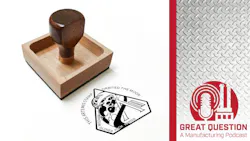




In this episode of Great Question: A Manufacturing Podcast, IndustryWeek's Jill Jusko speaks with Bryan Croft about how a small, family-run business unexpectedly became part of the Artemis II space mission. They explore how HC Brands’ Simply Stamps division was discovered through digital marketing efforts and tasked with engineering a highly specialized product to meet strict aerospace requirements. The conversation highlights the challenges of rapid prototyping, lightweight design, and meeting precise specifications under tight timelines. Along the way, they also reflect on the broader themes of innovation, company culture, and how even niche manufacturers can play a role in groundbreaking projects.
Below is an excerpt from the podcast:
Jill Jusko: Welcome to Great Question. I'm Jill Jusko. I'm an editor with IndustryWeek, and with me is Bryan Croft, CEO of HC Brands. Today, Bryan is joining us to tell the story about how his small, Florida-based company found itself contributing to the Artemis II space mission. As our audience knows, the Artemis II mission launched April 1 from the Kennedy Space Center, and it is regarded by many as a first step toward returning crewed missions to the moon and beyond. So its approximately 10-day mission is taking a four-person crew into lunar orbit aboard the Orion spacecraft, and during this mission, the crew is testing the systems necessary for both the moon landing and deep space exploration. It's exciting stuff. So welcome Brian.
Bryan Croft: Thank you. Super exciting.
JJ: So story you're about to share, we are talking about your Simply Stamps business. Can you tell us a little a bit about the company and how it got involved in the space mission?
BC: I'd love to, it's been the last 28 years of my life, so I'm very proud of it. So just the high level, it's a 70-year-old company started in 1954, I guess 72 is the actual numbers. Started as a rubber stamp company in the garage because that was the cool thing to do back then. I don't know. I wasn't even born.
My father started in the 70s as a delivery driver. 1999 my father purchased the company. About a week later, I was graduating from college, I went to University of North Florida in Jacksonville with a degree in marketing. Never really, mom and dad always said, you know, just get your degree. We'll figure out work later. And I'm like, okay, that's fine. And so right when I graduated college, mom and dad said, you want to join the family business? And I said, Okay, makes sense to me. I don't have any other amazing career plans, and I felt obligated to mom and dad, they put a lot of sacrifice to put me through college and all that.
So when I walked in the door, we were about stable company, $800,000 in annual revenue. I was employee number 10. I was quickly trying to figure out how to make more than $8 an hour that mom and dad and dad were paying me. And so I had two options. Either go to mom, ask for $10 she's pretty cool. She probably would have done it, or B, what is this internet thing all about? And this is 1999, right? So I basically took the route of, let me see if I can take our family business onto the internet.
In 1999 2000 I started building web pages, started selling on eBay and Craigslist wherever I can, just to get business outside of where we were founded, which is Jacksonville, Florida. Fast forward today, we're incredibly blessed. We're about $20 million in revenue. We process about 2,000 orders a day. We've 100% converted to e-commerce. HC brands is kind of the parent company. That's what I explained to my kids and people like this. We don't do a lot of marketing in our HC brands. That's just for tax simplification. That's the one tax filing we have.
We have nine niche brands for this conversation. Important one is Simply Stamps.com. That's where we really focus on the foundation of the rubber stamps that dad taught me. We also have customsigns.com and nametags.com and mykoozie.com—all kinds of little niche brands. But getting back to Simply Stampswe've been manufacturing rubber stamps for 70 years, and to be honest, it's pretty boring, right? When I'm hiring these new millennials, they're like, you can make a living making rubber stamps? And then they come in and they look at the 2000 orders a day, they're flowing through our building, shipping all over the world, and like, wow, this is kind of interesting. Yeah, it's pretty fun. So when I love the story, because here's what happened, getting into the story of, how did we get on? How do we have already chosen to make a stamp, right?
So we do a lot of search engine marketing, so we want whenever somebody searches for keywords that are related our industry and the stamp, so it's a signature stamp or a for deposit only stamp or a notary stamp or a logo stamp, right? We try to get our position, our Simply Stamps our website, like in the top Google rankings for that.
Probably I'll mess up the dates, but it doesn't, not really, mid November, one of my customer service agents comes in and says, Hey, I have a customer on SimplyStamps.com. They're from N-A-S-A, and they want to talk to the owner of the company. And this is like, a 21-year-old millennial. I'm like, N-A-S-A, like, you mean NASA? She's like, I don’t know. Like, I pause and say, Wait a minute, you're talking about NASA? Yeah, I want to talk to them again. We make a lot of amazing, awesome stamps, but when NASA calls, it's that dopamine hit? Yeah. Well, I'd love to be participating. What can I do?
So then we spent most of like November and December, working with their team on, okay, what is it they need, right? Obviously, the space limitations of the size of the capsule, they had very, very specific requirements. So, like, it had to be only three inches by three inches. It had to weigh what, less than one gram or one ounce, or whatever it was, and so that wasn't our traditional stamp. So on my team, we have about 100 employees today, and I'm the visiting visionary kind of marketing guy, like, when you start talking engineering stuff, for me, I get really nervous. That's just out of my lane of my brain, right.
We have an interesting gentleman here named Frank. And Frank loves engineering. He geeks out on this kind of stuff. He's old school. He pulled out his notepad, he started drawing. How would we make this for NASA? So then we took some, like, literally, he would draw a piece of paper. We would take a, like, an iPhone picture of it, and email it to them. Hey, this one, we're thinking, what do you guys think? This is what we've designed based on your specifications, one couple of iterations on that. Then we made them a sample and December, late December, January, sent them a sample. They said, this is perfect. This has been approved. And they took our sample up the next level of bureaucracy to get an approved to be put on the spaceship, on the capsule. So we walked through that. We walked through that, and then finally, in like, I'll call it, middle of January, we took the actual production, made the stamp, and sent it to them, and they put it on the rocket.
JJ: So did they tell you what they're going to do with this stamp?
BC: Every single one of my friends that I tell this story to, or they see some random news article, like, Why do they want to stick up? I'm like, Listen, I don't ask those kind of questions. I just try to fulfill the order. But of course, I asked. So basically, what they came back to me and said, Listen, what they wanted to do was have a stamp. And the stamp is the Artemis logo, the mission logo, and on the stamp, it actually says this stamp traveled around the moon. That's part of what the image on the stamp says. They wanted to be able to come back, land successfully, and then for the next several years, be able to stamp certificates and stamp different things for people that were a part of the mission, right? So they're able to say this stamp literally went around the moon, and now we're stamping your certificate. Thanks for doing X, Y or Z, right? So I thought that's a pretty cool idea, you know. So, yeah, but it was funny, like, who made this idea? They wanted us rubber stamp on the mission. But hey, I'm all about it. I got ink in my blood here, so I love rubber stamps, you know.
JJ: So NASA just found you via internet search.
BC: Basically, yeah, and again, I think that shows what we spend a lot of energy on, as being the stamp experts in the United States. You know, we've been doing it for a long time, and we like to share our you know, our story, our history. We've got lots of old pictures. We all have industry knowledge in this little, tiny, micro niche of rubber stamps and make badges and signs and things, right?
JJ: So when you call them back, I guess, were you at all, like, really, NASA? Or did you, or you were confident it was NASA that you were actually, I mean, before you made the call. Were you wondering if this is really NASA?
BC: Yeah, of course, that natural kind of wait a minute, hold on. This doesn't pass the smell test. What's going on here? So we basically got off of the phone call conversation, and then I said, Well, hey, here's my email address. Just send me an email on what your specifications are, so I can digest that. That's a little me doing background check. I want to make sure the email came from not I am [email protected]. It was actually NASA, you know, the Artemis mission email address. And so I worked with them, and then I got more like I also as the owner of the company, one of my main jobs is to excite our team, our employees, right? So I started sharing this.
Of course, the girl in customer service starts sharing it with her group. And I just like creating enjoyment in life in general. This is a fun little one order for us that created a lot of excitement for our little small business. So yeah, I basically took that email and then it was, then again, this is the bureaucracy that we all live in today, especially in NASA, they have to be very careful with their plan. There were 12 people copied on this email address talking about a rubber stamp to get approval and things. And I was just kind of going back and forth and just kind of kind of, it was fun. It was again, a dopamine and I was trying to create a relationship with NASA and be a part of it as much as we can. So ultimately, that led into a pretty good friendship relationship with Katie Franks, is her name, and she's kind of the head of communications and PR for this particular mission that got us all the way into, you know, we're only about two hours north of Cape Canaveral, we're all launched from.
Another kind of fun thing they did was in March, you remember, they rolled it out first, and then they brought it back in to make some changes. So the Saturday they rolled it out, that previous Friday, they invited all the vendors down to kind of celebrate the story and watch the rollout. So here I am, think about this for a minute. Here I am in this, there's 100 vendors there. They did an amazing behind-the-scenes tour. Thursday night, we did a little bit of networking, happy hour. Friday, we all met at the facility. They put us in these huge buses. They took us around. And here I am, the stamp guy, hanging out with SpaceX Lockheed Martin. You know, all these huge, IPL, all these huge vendors. I'm like, sitting in the back going, Hey, man, somehow I'm here. Just gonna deal with a ride, you know. So it was super cool.
They took us into the VAB, and I was literally 50 feet from the rocket that then took us to the launch pad. Then we actually went up on the launch pad. And then after that, they brought us into a huge conference room with probably a couple hundred people in there, and they brought in the executives, and we had, like, an hour lunch and kind of fireside chat. It was so amazing. I have an iPhone here, its got 150 pictures from that six-hour day.
JJ: That sounds really exciting. So it sounds to me like you had not worked with NASA before, or had you?
BC: No, I mean, I can go back. I could go back and look, in the 70 years history, we're in Florida, we're pretty close to them. There's not a ton of rubber stamp manufacturers or sign manufacturers near us. But I didn't really, I was trying to impress and make sure we got this job. I wasn't really looking forward to, have we done business with them in the past? I can. My dad actually mentioned, when I was telling my dad the story, he's like, Yeah, we did an order for them. We made a whole bunch of stickers or signs or something years ago, and I'm like, Well, Dad, what do you remember about that? It's like, I don't remember. I should remember the dopamine hit up to working with NASA, you know.
JJ: So when you are talking to NASA, you know, before you actually make this stamp. So, you know, NASA has a lot of exacting standards, you know, that are maybe stricter than, or just very different than what you are typically asked to do. Can you, I mean, you mentioned it briefly, but can you talk a little bit more about what some of the engineering requirements were?
BC: I could summarize that question, but it was a space issue, like physical space. They want to bring everything they can up there, but they have to have a checklist to say, Listen, we want to bring this, but there is just not room on in the cargo ship. So the biggest thing for us was space, and then we obviously, they have to know what everything weighs when they're going for all this long of a mission, right? So we basically took this we started with like this wood block, and we had to kind of engineer the wood block to make it hollow and just make it weigh not as much as a normal piece of wood would weigh. So we did a lot of engineering around just kind of getting that to the exact specifications that they requested and basically demanded. And I'm like, Okay, we're going to figure this out. And so we went through iteration after iteration. Oh, man, this weighs too much. Start over, like, we got to do it this way. Just a bunch of fun, like stamp geeks trying to make something for NASA.
JJ: Do you remember how much it had to weigh?
BC: It was one ounce. One ounce was the max. And it had to be, it was a traditional wooden handle rubber stamp. We had to make it so the handle was detachable, because that would save another inch or two. So basically, we made, like the wood block, and then the handle. We made it so they could remove the handle, so that we could kind of consolidate it all and put it in the packaging and meet the size requirements. So the weight requirements and the size requirements were the big things that they were really focused on.
We had to go through just the different type of woods. And basically they're all woods. And I can't remember the exact part of that conversation, that's the engineering world. But yes, there were specific, it's bamboo or whatever the wood was, you know. So, yes.
JJ: Okay, so you're having this conversation with NASA and you, as you say, there's a lot of engineering speak going on. Did you have any concerns about being able to do it.
BC: Yeah, one ounce is not a lot. So my first thing was, wait a minute, you got like, I don't know how to explain this. I'm not sure we can physically do this. And then so, part of my team was like, no, no, we're going to figure this out. This is NASA. We're going to help, right? So they took the challenge of the engineering world literally working a lot of weekend hours, or just kind of having fun with it. I think one of my guys took it home and used a special saw, because he's a woodman. He has it in his garage. Like, this is normal, but I have all these saws at my house. I'm taking them every weekend. I'm gonna make a ... to bring it back. And we were doing that during prototyping. And ultimately, the final, the final product as well.
JJ: Say you were making a non-space-bound rubber stamp of that size? Would it be more like two ounces or three ounces? Like, did you have to cut back on weight as much as 50%?
BC: I would say, significant. When I have to just take a stamp off the shelf and mail it to a customer it's about five ounces. Then I just have to do that, because it's getting the postage based on the ounces. So basically, we had to kind of reduce it by roughly 80%.
JJ: How many iterations do you think you went through?
BC: Probably 10 at least. I remember looking at all the different, back in our stamp production department, all the different Well, this one weighed four ounces. That's not enough. Throw it away. This one weighs two ounces. Okay, we're heading the right direction, but it doesn't work. Throw it away. So I would say they were, and then the next thing was, Okay, well, the handle. How do we make the handle weigh less? How are we going to, work on that with them? So that was kind of, that was fun, I would say, roughly 10 different iterations over the couple of weeks we were working on.
JJ: How different does it actually look than a typical stamp that you were making of that type? Again, that wasn't space bound.
BC: I still have one of the old prototypes on my desk. So basically, we hollowed out the wood in this area up here so that we could this one's the stamps not coming off, the handle's not coming off. But basically, and then we had to make use a different type of rubber that we normally use, lighter rubber. Normally use like, a red rubber. This is a gray rubber that weighs less. Those are kind of some of the little components that that we had to kind of engineer.
JJ: And are your handles typically removable?
BC: No, typically we put the handle on a little screw in there to hold it even, even better. But for … they wanted it to be able to kind of be removable. So we did not put the metal screw in there, and we hollowed it out to kind of save that weight.
JJ: So do you just push hard for it to hold? Or how does that, or does it click in?
BC: Yeah, I mean, it's kind of like a peg almost. So you just kind of put it in there and kind of maybe give it a little bit of a mallet, and then, like we did this, I can't get it off. Now, when they when they come home, they won't be able to use it, and it's easier to use if it has a handle. But during the actual mission, actually, I've been funny. I've been watching every night because they're doing a lot of cool things on YouTube. You can watch the live feeds and stuff. I'm like, man, I would pay a ton of money if I could see them bring out my stamp and play with it. But I didn't see that yet, but I'm watching every night.
JJ: Yeah, for sure, I would be doing exactly the same thing. Yeah. So you guys had to be just some celebration internally when you hit that weight, you know, the weight mark in in a stamp that OK, we met their requirements.
BC: Yeah, and then when you have that done, and you say, okay, NASA, do they still, is it just a thumbs up at this point, because once we found the back and forth was, hey, we think we have a perfect prototype. Let me send it to you. You guys review it, you weigh it, you give me feedback. And basically, once we went through our 10 or so iterations, they got the final sample and said, Wow, this is perfect. Go ahead. Make us the actual cleaner one. Like, we had a lot of like, pencil markings and whatever. So once we replicated the prototype, then it was pretty easy. From there, there was a lot of email back and forth, but we finally sent them a physical sample, they got approval, and then we just replicated the physical sample.
JJ: So from the time that the customer service person you know approached you and said, somebody from NASA wants to speak to you, to the time that you have a completed product that you're ready to package up and send to them — what is that time frame looking like?
BC: Yeah, it was about a six week kind of process. And something along that journey was they said, Listen, we don't even know if this can get approved or not, so there's no way we're going to get approved to get on the ship unless we have a sample. So part of us, you might be doing this for nothing, but it was a fun project, right? So once they got it, then they're like, Wow, I think we get this approved. They went through their process to get it approved, and then we're about a six week process for us.
JJ: So did you see watch the launch? Or was anybody from your team there in person?
BC: Yes, unfortunately, it was, of course, just, it's just life. I went down there when it was supposed to take off, and I saw the rollout, and I did all that, that was fun. Then it got delayed. And, of course, family Easter, we had planned to go hang out in Tennessee, so I was not personally able to go. I did have several team members that went down and shared a lot of videos and pictures and fun, but I had the family commitment. We had to get up to Tennessee, so I watched it like millions of Americans on live TV, right. So I still regret that I should have told my wife, no, I'm going to go south for two hours. I think about that every couple of minutes, and she would didn't realize, like, watching some of the videos and like, just seeing the constant conversation about what we're doing is just so inspiring. They're like, gosh, I was so close. I could have gone down there. I'm just regretting it a little bit.
JJ: Maybe they'll call you again. We need another stamp.
BC: Absolutely, absolutely, and that's why I'm trying to maintain friends with my relationships down there. Now, what else do you guys need that we can make so?
JJ: So how does it feel to know a piece of your business is aboard the Orion spacecraft?
BC: Yeah, I don't know. It's almost like I remember as a little kid being embarrassed to tell my friends that my dad owned a rubber stamp company. Yeah, I don't know. My dad's got friends or lawyers and doctors, and we own a rubber stamp company, right? And then I don't know my career, although we've been incredibly blessed to leverage the Internet to 20x the size of our business. But it's still, at the end of the day you make rubber stamps? I answer that question daily, you know. So to be able to kind of say, hey, yeah, we make rubber stamps, and there's one up on the mission, on the mission right now, it's a huge sense of pride, basically, is the main word I would say, you know.
I was able to have a lot of fun and educate all of our younger generation what NASA is, right? And part of my role today is in a company's culture, right? I spend so much time just making sure we have a great fun environment to work at. And so we were able to kind of celebrate it in a number of ways, from our marketing team putting emails or, you know, just putting a LinkedIn post about, look what we did, just able to leverage it and then long term, what I'm seeing now is in this crazy world we live in today, if you go into like ChatGPT, or you go and you mentioned HC brands, it's gotten picked up by so many different things. Now it's actually helping our entire company rise a little bit from the rubber stamp industry, just more exposure around that. We're seeing our revenue grow a little bit.
For the 20,000 people a day in the United States that want rubber stamps, we're seeing a little bit more orders. The one thing we've had, and I'm actually working with NASA about this right now. I probably had 100 people say they want to buy a replica, and I, am I allowed to do that? Do I have to, like, get licensed, or, need a guy? Up to this point, it just never crossed my mind that somebody will buy a replica. But now I'm kind of like, Wow, maybe we should.
So I'm talking to the team down at NASA later on today, just to ask the questions. I mean, again, I haven't gone this far either. I want to get NASA's approval before I spend any brain power on this, right? But I think that's part of the story, is the engineering behind this piece of wood and the stamp. So if I was to do it, we want to get as close as we can to the exact replica, and we've done it 10 or 11 times during our iteration, so we know how to do it, right? So I would prefer that, no, we're going to send an exact replica, right? That's my that's that would be my goal, but that's a little bit cart before the horse. I want to make sure that NASA is okay with this, you know.
JJ: I didn't ask you, actually a very important question, the design of the actual picture that is being stamped out, is that something that NASA provided you with?
BC: They provided us with the logo, and then the text around the top there, it says, This stamp orbited the moon. This Artemis stamp orbited the Moon and then their mission logo, which is important … for every astronaut had a little part of the logo design. I thought that was pretty special, you know. So that's just another little tidbit.
JJ: Well, I haven't been involved in stamp … but I have been involved in engraving on glass trophies, and I know you kind of have to think through that design, because [if] you have two fine of lines or some other things, it can be problematic.
BC: Yeah, and that was one of the first questions, because if you just go to Google and you type Artemis logo, Mission logo, it's like, set colors. How are we going to make a stamp seven color? It doesn't work that way. But then, when they presented us the artwork, it was all one color. And somebody else had kind of thought that through a little bit. So I was like, sweet, the logo they want is pretty easy. We can make that. I don't have to ask for any iterations on the logo itself.
JJ: I want to thank you, Bryan, for your time for this interview today. I appreciate it very much. And congratulations. I think I would be very excited, if it were me in your position, in your team's position, and I had a little piece of me on the on the spacecraft.
BC: It's super exciting. And you know, the bigger picture for us as well. I don't know if you get much bigger than NASA, but is it really a boring rubber stamp, or is it really, like celebrating something, right? We make a lot of address stamps for people that move into new houses. And from our mindset, we're not just making an address stamp, we're partnering and celebrating with that person that just bought their American dream, their first home, right? Or lots of small businesses all over the country. Do logo stamps, whether it's the boutique place or the coffee shop or NASA, right? So we're participating in the connections with our customers. To us, it's not a boring rubber stamp. It's really a cool product to celebrate, whatever you want to do. We're doing a lot of wedding save-the- date stamps for the wedding that's coming up. To me, this is my world of rubber stamps, and I'm trying to leverage it and build it for the next 70 years of our company.
About the Podcast
Great Question: A Manufacturing Podcast offers news and information for the people who make, store and move things and those who manage and maintain the facilities where that work gets done. Manufacturers from chemical producers to automakers to machine shops can listen for critical insights into the technologies, economic conditions and best practices that can influence how to best run facilities to reach operational excellence.
Listen to another episode and subscribe on your favorite podcast app
About the Author
Jill Jusko
Jill Jusko is executive editor for IndustryWeek. She has been writing about manufacturing operations leadership for more than 20 years. Her coverage spotlights companies that are in pursuit of world-class results in quality, productivity, cost and other benchmarks by implementing the latest continuous improvement and lean/Six-Sigma strategies. Jill also coordinates IndustryWeek’s Best Plants Awards Program, which annually salutes the leading manufacturing facilities in North America.