The human side of industrial safety: PPE, ergonomics, and heat stress trends in manufacturing
Key Highlights
- Heat stress is a growing safety concern, prompting new regulations and protective strategies in high-temperature work environments.
- PPE compliance is increasingly driven by comfort, fit, and personal style.
- Wearable technologies and smart PPE are gaining traction, providing real-time insights into worker health and ergonomic risks.
- Expanding safety assessments now include physical stressors like repetitive motion, with ergonomic solutions supporting long-term workforce health.
- Material handling innovations, such as lift tables and pallet positioners, reduce overexertion injuries and facilitate safer human-robot interactions.
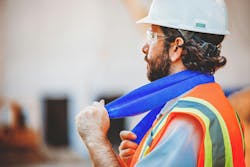
Who wouldn’t want cool new shoes for work? The coolness factor may matter to manufacturers, if it gets workers to stand by personal protective equipment (PPE). Safety outcomes are increasingly influenced by how well protective equipment, tools, and workflows are designed around the human body. Safety leaders from industrial equipment distributor Global Industrial Company highlight how PPE innovation, ergonomics, and heat stress mitigation are shaping safer work environments.
Heat stress emerges as a safety priority
Heat stress has become an increasingly important safety concern, particularly in industrial and manufacturing environments. Heather Lake, director of product management at Global Industrial, identified heat stress protection as one of the most significant trends currently shaping workplace safety. The growing regulatory environmental is also driving increased attention on tools and strategies designed to protect workers operating in high-temperature conditions.
“There is currently legislation that is being proposed that will create and define standards in the workplace for heat stress,” she says. (See the sidebar for more information on current OSHA heat stress protection standards.)
PPE compliance depends on comfort and fit
The conversation around personal protective equipment is shifting from basic compliance to worker acceptance. According to Lake, PPE adoption is closely tied to comfort, fit, and personal preference.
Occupational Safety and Health Administration (OSHA) regulations for employee exposure to heat
In July 2025, both the Senate (S. 2298) and the House of Representatives (H.R. 4443) introduced legislation to address worker related heat stress. In August 2024, OSHA first published a Notice of Proposed Rulemaking for a standard on “Heat Injury and Illness Prevention in Outdoor and Indoor Work Settings.” OSHA received more than 43,000 public comments during the comment period, which ended on January 15, 2025.
In the absence of a specific standard, OSHA enforces Section 5(a) of the OSH Act, the general duty clause, which requires each employer to provide a workplace that is free of hazards likely to cause death or serious physical harm.
Section 18 of the OSH Act also authorizes states to establish their own occupational safety and health plans and, if approved by OSHA, preempt standards established and enforced by OSHA. Currently, 21 states and Puerto Rico have state plans that cover all employees, and six states and the U.S. Virgin Islands have plans that cover only state and local government employees not covered by the OSH Act.
California, Maryland, and Oregon have state occupational safety and health standards that cover both indoor and outdoor heat exposure. Washington has a state standard that covers outdoor heat exposure, Minnesota has a state standard that covers only indoor heat exposure, and Colorado has a set of regulations that govern outdoor heat exposure in agriculture.
The new Congressional legislation, both titled the Asunción Valdivia Heat Illness and Fatality Prevention Act of 2025, would require OSHA to develop a federal standard for heat stress protection. Both bills are named after Asunción Valdivia, a California farmworker who died from heat stroke in 2004. The bills were introduced in the House and Senate last year, and in July, were referred to the House Committee on Education and Workforce to the Senate Committee on Health, Education, Labor and Pensions.
“Fit and style drive compliance, therefore there are many new innovative products in the market that cater to the employees’ own personal style,” she says.She pointed to safety footwear as a clear example of this trend. “There are a variety of safety shoes that meet all the regulations in a variety of new silhouettes, including athletic shoes, skates, etc., from trusted shoe brand names like New Balance and Airwalk,” Lake noted.
Smart PPE and wearables gain traction on the plant floor
Alongside traditional PPE innovation, interest in wearable technologies and smart PPE is growing among industrial and maintenance professionals. These products are designed to provide additional insight into worker conditions and movement.
“There is an increasing trend of new product innovation in this segment of the market and adaptation of these products in the workplace,” Lake says. She estimated that smart PPE is about 8–9% of the market.
Wearable solutions are also being used to help address ergonomic risk by monitoring motion in real time, helping to identify unsafe movement and support injury prevention.
Ergonomics expands beyond traditional safety risks
Safety planning has traditionally emphasized hazards such as slips, trips, and falls. However, Lake notes that risk assessments are now expanding to include other physical stressors. “Now it has expanded into other areas such as repetitive motion and duration of time spent on an activity,” she says.
To address these risks, employers are implementing strategies such as task rotation and investing in products designed to reduce strain during repetitive or physically demanding work.
Lake emphasizes that ergonomics plays a broader role in supporting the workforce over time. “Ergonomics protects the body, boosts efficiency, and supports long, healthy careers in the trades,” she says. By reducing cumulative injuries and minimizing physical strain, ergonomics helps workers maintain productivity and wellbeing.
Material handling spotlight: how to reduce overexertion injuries
Ergonomics is key driver of safety improvements in material handling and storage environments, says Chris Lubniewski, director of category management for material handling at Global Industrial. He points to overexertion from bending, twisting, and lifting as a significant source of workplace injuries.
These overexertion injuries can cost companies a lot of money in claims, Lubniewski says, in an environment where reports of worker injuries are on the rise. Some of these risks can be addressed with the use of pallet positioners and lift tables in warehouse and plant settings.
“Pallet positioners or carousels rotate and maintain the proper height of products on a pallet as they are placed or removed by workers, allowing them to operate at waist level and limiting improper or strenuous movements,” Lubniewski explains.
Lift tables provide similar ergonomic benefits by raising and lowering loads using electric or hydraulic power. Some models also offer tilting and rotating capabilities and mobile units, increasing their versatility across the plant floor.
As automation and robotics become more common in warehouses, new safety considerations are emerging, such as the risks related to human–robot interaction, programming failures, and the maintenance of automated systems.
To help manage these concerns, some facilities are using material handling equipment as a physical and operational buffer between workers and robots, Lubniewski says. For example, pallet positioners and lift tables, can be combined with robotics to move, stack, and transport loads autonomously.
“These products can act as a gap between human and robot contact, which can alleviate safety concerns,” he says. He also notes that hybrid automation can serve as a bridge between partial and full automation.
Safety designed around the worker
Safety outcomes are influenced by how well work environments are designed for the people performing the work. From PPE that workers are more likely to wear, to ergonomic tools that reduce strain and heat stress protections that address physiological risk, the human side of safety remains central. Comfort, ergonomics, practical design, and even a brand name or cool silhouette, can improve compliance, reduce injuries, and support long-term workforce health and without separating safety from how work actually gets done.
About the Author

Anna Townshend
managing editor
Anna Townshend has been a journalist and editor for almost 20 years. She joined Control Design and Plant Services as managing editor in June 2020. Previously, for more than 10 years, she was the editor of Marina Dock Age and International Dredging Review. In addition to writing and editing thousands of articles in her career, she has been an active speaker on industry panels and presentations, as well as host for the Tool Belt and Control Intelligence podcasts. Email her at [email protected].