From compliance to prediction: How data is redefining industrial safety
Key Highlights
- Manufacturers are adopting cloud-based safety platforms to centralize data, streamline compliance, and enable remote access for safety teams.
- Mobile apps allow workers to report hazards instantly, improving data accuracy and response times on the plant floor and remote sites.
- Predictive analytics and AI are used to identify high-risk areas before incidents occur, enabling proactive risk management.
- Digital safety tools facilitate continuous documentation and reinforce safety behaviors, reducing reliance on manual record-keeping.
- Safety is increasingly viewed as an integral part of operational strategy, driving efficiency, resilience, and cultural change in industrial environments.
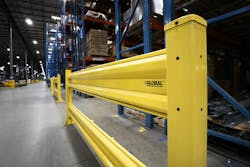
Industrial workplace safety is undergoing a fundamental shift. What was once driven largely by compliance checklists, periodic audits, and post-incident investigations is increasingly becoming a proactive, data-driven discipline. Safety product leaders from Global Industrial Company, a national distributor of industrial equipment and supplies, talked with Plant Services about technology’s central role in how manufacturers and industrial facilities identify risk, improve compliance, and prevent incidents before they occur.
“Employers are moving toward data-driven safety programs, using analytics and incident data to proactively identify hazards, improve audits, and predict risk,” says Heather Lake, director of product management at Global Industrial.
This digital shift is also seen more broadly in how safety is planned, executed, and measured across industrial environments. Centralized digital platforms to manage safety data are replacing the work of tracking incidents, audits, and corrective actions through disconnected systems or manual processes.
Cloud-based safety platforms centralize EHS data and connect safety management to daily manufacturing operations
“Organizations are adopting cloud-based safety platforms to centralize safety data, streamline compliance, and improve access across teams both on-site and remote,” Lake explains. These software-as-a-service (SaaS) platforms allow safety managers to move beyond static reporting and gain real-time visibility into safety performance. They have real-time dashboards and advanced reporting tools for safety, continuously tracking incidents, near-misses, and leading indicators.
Mobile apps extend this visibility to the plant floor and other remote locations. Safety leaders can identify trends earlier and respond faster.
“Workers can now report hazards, incidents, and observations directly from the field using mobile apps, eliminating delays and improving the accuracy of safety data capture,” Lake notes. Together, these tools are shifting safety management from a retrospective exercise to an ongoing, operational function.
The growing role of technology is changing the safety industry as a whole, Lake says. She points to recent industry events as evidence of this shift. “This trend was especially evident at the last ASSP conference, where there was a noticeably larger presence of software and technology providers, a clear signal that digital transformation is reshaping the safety industry,” she says.
The increased visibility of technology vendors reflects broader acceptance that safety performance is closely tied to data quality, system integration, and digital access. Operational safety is no longer viewed as a standalone function, but as an interconnected system that spans operations, maintenance, and workforce engagement.
While regulatory compliance remains a core requirement, technology is changing how organizations approach it, even as enforcement pressure increases in some areas of industry. Digital safety systems allow companies to document compliance continuously, rather than scrambling to assemble records after an inspection or incident.
“While OSHA enforcement is increasing, technology gives companies the tools to be proactive rather than reactive,” Lake says. Digitized processes not only simplify documentation but also reinforce consistent behaviors and accountability.
By embedding safety into daily workflows and making data accessible in real time, organizations can strengthen compliance while also improving overall risk management. As Lake notes, digitization supports both operational resilience and cultural change.
Predictive analytics help manufacturers identify safety risks earlier and prevent incidents
Beyond improving visibility and compliance, data-driven safety systems are increasingly being used to anticipate risk. Some platforms now incorporate predictive analytics and early-stage artificial intelligence to identify patterns that may indicate elevated risk.
“Data-driven systems are helping companies automate the risk assessment process, assigning severity scores, identifying systemic issues, and prioritizing corrective actions more effectively,” Lake says. In some cases, machine learning models analyze historical data, environmental conditions, and behavioral patterns to flag potential hazards before incidents occur.
With this kind of safety knowledge, organizations can take action earlier, by reallocating resources, adjusting procedures, or addressing the underlying systemic issues. As Lake summarizes, “Rather than reacting to incidents after they happen, companies are now using data to identify high-risk areas before incidents occur.”
Safety's role in industrial organizations is being reshaped as a core operational strategy
The cumulative impact of these changes is a redefinition of safety’s role within industrial organizations. With digital tools, companies can allocate resources more efficiently, prioritize the most significant risks, and foster a culture of continuous improvement. “As safety continues to evolve, technology is becoming a core strategy, not just a tool, for reducing risk and driving measurable improvements in EHS performance,” Lake says.
As industrial environments grow more complex, the move from compliance to prediction signals a broader maturity in how safety is managed. By leveraging data to see risks sooner and respond faster, organizations are positioning safety as an integral part of operational excellence, not just a regulatory obligation.
About the Author

Anna Townshend
managing editor
Anna Townshend has been a journalist and editor for almost 20 years. She joined Control Design and Plant Services as managing editor in June 2020. Previously, for more than 10 years, she was the editor of Marina Dock Age and International Dredging Review. In addition to writing and editing thousands of articles in her career, she has been an active speaker on industry panels and presentations, as well as host for the Tool Belt and Control Intelligence podcasts. Email her at [email protected].