Right to Repair in the digital age: What Deere’s settlement means for industrial maintenance
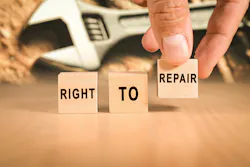
Last week we published a news story about the Federal Trade Commission's recent settlement with Deere & Company about Right to Repair. While the suit centers on the manufacturer’s agricultural equipment, the issues at the heart of the case are about who can repair increasingly complex equipment and what owners should expect after making a purchase.
Right to Repair is already having a consumer moment in industries like automotive, electronics, and medical equipment. Even McDonald’s is fighting to fix its own McFlurry machines, and more states are passing laws to protect consumer rights to repair things they own. International Repair Day is October 17 for all of those that celebrate.
The recent FTC settlement requires Deere to make available to farmers and independent repair providers the same repair resources it currently provides to authorized dealers, including software capabilities and diagnostic information. I think it signals that regulators are supporting Right to Repair and access to the tools and software to do so.
Access to repair resources includes the ability to read, clear, and reset electronic fault codes; reprogram electronic components; pair newly installed parts with equipment; restart machines following certain shutdowns; and access troubleshooting databases and technical guidance. You might be wondering, when did farming get so technical?
This probably isn’t surprising to maintenance and reliability professionals, who have been experiencing a similar trend: modern equipment increasingly depends on software.
The maintenance toolbox is becoming more digital
Maintenance has traditionally relied on mechanical expertise. Technicians inspected bearings, replaced worn components, and consulted paper manuals to troubleshoot problems. But now, more advanced machines also contain embedded electronics, connected sensors, and sophisticated control systems.
Replacing a component may require software configuration or electronic pairing before equipment can return to service. A shutdown condition may not be resolved with a mechanical repair alone; it may also require resetting fault codes or reprogramming a controller. The maintenance toolbox has expanded to laptops, cloud platforms, and OEM applications.
Beyond its legal implications, the Deere settlement reflects the growing role software now plays in equipment maintenance. Access to diagnostic software and configuration tools can directly influence how quickly equipment returns to production.
To be clear, many industrial equipment suppliers already provide end users with extensive diagnostic capabilities, and many automation vendors actively support interoperability and open-source access to industrial data. Even so, the settlement could raise broader questions about what level of digital access equipment owners should reasonably expect as machines become more software defined.
In a software-defined world, who owns uptime?
The settlement also raises questions about control over industrial assets. Many maintenance organizations depend on OEM software platforms and remote diagnostics, and many industrial OEMs work closely with manufacturing customers to provide technical support or provide the necessary tools to do so in-house.
Even with a friendly vendor relationship, it may be necessary to consider ownership, not only of the equipment, but also of its data. As equipment becomes more software-driven, maintenance leaders may need to consider what happens when critical repair capabilities reside primarily within an OEM ecosystem.
The rise of the as-a-service business model can also complicate this issue. Maintenance-as-a-service or equipment-as-a-service is a rising trend. It’s often a financial decision made when manufacturers don’t want to make a big capital expenditure investment for equipment, and as-a-service models allow them to move it to an operational expense. As an example, Kaeser Compressors offers compressed-air-as-a-service, including installation, monitoring, and maintaining the system.
All these models are great for many reasons, but it does raise some questions about who actually owns that equipment, and more so, who owns the data? Hands-off maintenance from a third-party may be the right option for some operations. Maybe you don’t need access to your machine data now, but will you want it in the future? Maybe a third party manages your data and analysis, but what if that changes? Who keeps the data long term?
The growing convergence of maintenance and digital skills
Another implication is the continuing convergence of maintenance, controls, and information technology. Reading fault codes and configuring electronic components may require skills that extend beyond traditional mechanical repair, and we’ve talked a lot about the upskilling happening in manufacturing.
Maintenance technicians need familiarity with software interfaces, electronic systems, and networked equipment. And they might need to work more closely with IT or controls engineers to do machine repairs or routine maintenance. The boundaries between mechanical maintenance, controls engineering, and digital technologies could continue to blur. (In fact, I spent six years covering maintenance and controls engineering when my time was split between Plant Services and Control Design, a move made in part because of the growing overlap between the two industries.)
Digital competency for maintenance engineers could be a leg up in their careers and how manufacturers take hold of the changing technology landscape.
Evaluating serviceability as part of equipment procurement
The settlement also serves as a reminder that serviceability should remain an important consideration during equipment selection. Maintenance and diagnostics might not be center of mind for leadership or operations, so maintenance teams should get involved early in the procurement process, to raise questions, such as:
- What diagnostic information is available to internal maintenance teams?
- What software tools are required to perform repairs?
- Which capabilities are available only through authorized service channels?
- What technical documentation and troubleshooting resources are accessible?
- How are replacement parts configured or commissioned?
- How will service and support requirements evolve over the asset's lifecycle?
Lessons for equipment manufacturers
More so, the Deere settlement may affect machine builders, robotics suppliers, automation providers, and other industrial OEMs that aren’t providing adequate access to fault codes, the tools necessary to reprogram electronic components and restart machines after shutdowns, and access to technical guidance.
With intelligent, connected machines, OEMs also face the challenge of balancing intellectual property protection and cybersecurity requirements with customers' expectations for serviceability and operational autonomy. Do customers have access to repair information? What software capabilities must be available to asset owners? How does service support strengthen customer relationships with manufacturers, while preserving equipment security?
The Right to Repair movement has largely been focused on consumers, and industrial OEMs typically have a very different relationship with their manufacturing customers, than those end users have with consumers. But the Deere settlement signals that the conversation around repair is continuing to evolve. As software takes on a larger role in industrial equipment, manufacturers and asset owners alike may need to rethink what serviceability and ownership look like over the life of an industrial asset.
About the Author
 Anna Townshend
Anna Townshend
head of content
Anna Townshend is the chief editor and head of content for Plant Services. She has been a journalist and editor for more than 20 years and joined Plant Services and Control Design as managing editor in June 2020. Previously, for more than 10 years, she was the chief editor of Marina Dock Age and International Dredging Review. In addition to writing and editing thousands of articles in her career, she has been an active speaker on industry panels and presentations, as well as host for Great Question: A Manufacturing Podcast. Email her at [email protected].