Podcast: Can AI help manufacturers overcome the skilled trades talent shortage?
Key Highlights
- Manufacturers face a 1.3 million-worker skilled trades gap, with retirements expected to increase demand for talent.
- Reshoring is increasing demand for welders, machinists and maintenance technicians as more production returns to the U.S.
- AI can help close the talent gap by embedding expertise, reducing reliance on prior experience and expanding the potential talent pool.
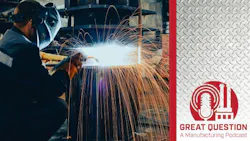




In this episode of Great Question: A Manufacturing Podcast, Anna Smith explores the growing skilled labor shortage facing U.S. manufacturing. She examines data on the 1.3 million-worker talent gap, an aging workforce and rising demand driven by reshoring and data centers. Smith also looks at how upskilling, education partnerships, apprenticeships and AI can help manufacturers expand their talent pools. The discussion highlights strategies for developing the skilled workforce needed to support continued domestic production growth.
Below is an excerpt from the podcast:
Welcome to Great Question: A Manufacturing Podcast. I’m IndustryWeek Senior Staff Writer Anna Smith, and today we’ll be taking a look at recent statistics and expert analysis surrounding the skilled labor shortage in manufacturing and how the industry is working to address the gap.
First, we’ll take a look at some recent findings from Lightcast’s report Defining the Skilled Trades: A Data-Driven Blueprint for the Future, published late last month.
The report first defines skilled trades as “the 135 hands-on, in-person trade occupations that don’t require a four-year degree but that do require one or more of the following: apprenticeship training, certificate completion, education up to and including an associate’s degree, [or] other on the job training and experience.”
Using this definition, Lightcast says 9% of all U.S. jobs are in the skilled trades, with 60% of those consisting of jobs in construction and manufacturing. Lightcast found that for each person completing a training program, the skilled trades have three job openings, creating a talent gap of 1.3 million workers.
According to Lightcast occupation demographics data, around 25% of workers in the skilled trades are 55 or older, meaning demand is expected to rise as workers begin to retire.
The report also notes that, according to Lightcast job postings data, around 70% of jobs in the skilled trades have an AI exposure score of less than 30%, meaning “skilled trade occupations are less likely to be replaced or reshaped by AI.” In fact, the rapid growth of data centers is adding to the demand for skilled workers, escalating the talent shortage if industries aren’t able to keep up with the demand.
Also, as companies begin to reshore, demand for more skilled trades workers will continue to rise. According to the 2026 USA Reshoring Survey Report from the Reshoring Initiative and Regions Recruiting, 36% of OEM’s surveyed say they have reshored or are actively executing additional reshoring, up from 29% in 2025. Among contract manufacturers surveyed, 31% say they have reshored or are actively reshoring, and 32% say they are currently quoting reshoring projects.
With this additional manufacturing work coming to the U.S., manufacturers are looking for ways to support the growing need for skilled workers. The USA Reshoring Survey Report found that 66% of respondents say hiring technicians like welders and machinists is very difficult or at a crisis level, with 60% saying the same about maintenance and repair techs. Also, 64% of contract manufacturers report some level of difficulty recruiting or retaining workers over the last year as a result of deportations, adding to the disruption.
To fill these roles, respondents named which resources they are using to fill skilled trades occupations: 61% are using trade or vocational schools, 58% are using internal upskilling or reskilling programs, 51% are using community college partnerships, 46% are using 3rd party staffing and recruiting agencies and 43% are using apprenticeships.
According to their Expanding the Skilled Manufacturing Workforce with AI report published on September 10, analysis from Deloitte and the Manufacturing Institute (MI) finds that artificial intelligence can lower barriers to entry as “embedded expertise and guidance reduces dependence on prior experience and tribal knowledge,” a helpful tool as more workers begin to retire.
In addition, the Deloitte and Manufacturing Institute analysis found that technicians from industries that are adjacent to manufacturing have overlapping capabilities and knowledge that could transfer to manufacturing technician jobs, expanding the potential talent pool.
Whether it’s through upskilling current employees, partnering with local institutions, expanding your talent search or implementing new technologies, manufacturers have an opportunity to support the development of skilled trade workers to fill the rapidly expanding gap, ensuring the U.S. can sustain the resurgence of domestic production.
About the Podcast
Great Question: A Manufacturing Podcast offers news and information for the people who make, store and move things and those who manage and maintain the facilities where that work gets done. Manufacturers from chemical producers to automakers to machine shops can listen for critical insights into the technologies, economic conditions and best practices that can influence how to best run facilities to reach operational excellence.
Listen to another episode and subscribe on your favorite podcast app
About the Author
Anna Smith
Anna Smith joined IndustryWeek in 2021. She handles IW’s daily newsletters and breaking news of interest to the manufacturing industry. Anna was previously an editorial assistant at New Equipment Digest, Material Handling & Logistics and other publications.