Smart factories need smart people to run them
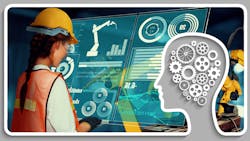
To stay abreast of industry trends, we, the editors, read countless articles and editorials written by experts from across verticals. We're always learning more about the people, technologies, and events that are making waves in the manufacturing space, and we want to share this information with you. In this brief, we’ll cite our sources and highlight columns and features that can help improve uptime at your plant.
Automation
Robots Need Human Labor Management [Foundry]
The overexaggerated feat that robots will soon replace workers on the plant floor seems to be subsiding, and in its place is the understanding that robots are filling the dangerous, repetitive, and least-desirable jobs in the industry. Robots are helping humans aspire to new positions where their powers of leadership, reasoning, and understanding can be put to good use. This article explores the symbiotic relationship between humans and robots, and the importance of labor management technologies.
Management
Welcome to the ESG Evolution [EHS Today]
The relationship between environment, health and safety (EHS) and environmental, social and governance (ESG) is a hot topic for many industry executives. These two policies, although always important, are becoming key components of many organizations’ overall business strategies. This article outlines the benefits and challenges of fostering a partnership between EHA and ESG.
Safety and Security
Going beyond dust hazard analysis [Processing]
Dust explosion protection is an important concern for many agricultural and food processing facilities, but completing a dust hazard analysis (DHA) is only the first step. Complying with NFPA 61 involves developing and implementing an action plan as well as selecting the right equipment. This article showcases how processing plants can minimize the risk of combustible dust explosions.
Technology
Digital Transformation on a Small-Business Budget: It Can Be Done [Industry Week]
There is a misconception that digital transformation is only possible for large companies with limitless resources at their disposal. Many believe that investing in Industry 4.0 initiatives will cost millions of dollars up front for new plants and state-of-the-art equipment. Luckily, a gradual, step-by-step approach to digitalization is available for most manufacturers. This article explains how small- and medium-sized manufacturers can implement Industry 4.0 strategies at their facilities without breaking the bank.
Workforce
Considering the human factor within the digitalization of manufacturing [Smart Industry]
Implementing a digitalization strategy at your facility is about more than purchasing the latest and greatest technology. Without the right people and processes in place to help you analyze, interpret, and utilize the gathered data, your smart manufacturing dreams will stay elusive. This article highlights why smart factories need smart people to run them.
About the Author
 Alexis Gajewski
Senior Content Strategist
Alexis Gajewski is a manufacturing writer and editor with nearly 20 years of experience covering the people, practices, and technologies that keep industrial facilities running. For more than a decade, she served as Senior Content Strategist for Plant Services, creating content for plant managers, engineers, and maintenance professionals on a variety of industrial topics.
During her tenure, Alexis worked to develop the brand’s digital strategy and helped launch and produce Great Question: A Manufacturing Podcast. She also created The Lighter Side of Manufacturing, a weekly blog that explored the inventive and sometimes humorous side of the industry.
Alexis co-founded Influential Women in Manufacturing, a recognition program that honored 49 women in its first two years, earned an industry award for Best Product Launch, and received a proclamation from Illinois Governor JB Pritzker and a commendation from U.S. Senator Tammy Duckworth.
She also led newsroom operations and development at a large media company where she set editorial standards, developed training curriculum, and helped support AI adoption for more than 150 editors across 80+ brands spanning manufacturing, industrial processing, automation, and more.
Additionally, Alexis works as a freelance writer and editor, and her areas of interest include continuous improvement, the skilled workforce, and the role of emerging technology on the plant floor.
Connect with Alexis on LinkedIn