Maintenance Mindset: Endurance hunters and reliability engineers—3 ways to win by outlasting failure
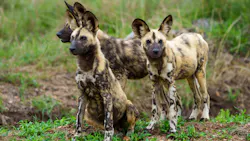
On a long flight home from Bangkok, I watched several episodes of a nature documentary. The segments on wild dogs, hyenas, and wolves were fascinating. I saw various similarities with maintenance and reliability teams.
African Wild Dogs: The relay team that never rests
African wild dogs are not just fast. They are organized. Their hunts look like a well-run shift schedule. One group pushes, another recovers, then rotates back in. No single dog carries the full burden for long, yet the prey never gets relief.
In reliability engineering, this is the equivalent of distributed condition monitoring and layered defense. The system doesn’t not rely on one sensor, one technician, or one inspection interval. You build a system where responsibility rotates and overlaps:
- Online sensors track real-time conditions.
- Operators observe behavioral anomalies.
- Analysts trend and interpret data.
- Maintenance executes targeted interventions.
No single element carries the system. Wild dogs succeed because they eliminate gaps. The prey never gets a chance to recover. In plants, failure behaves the same way. Give it a gap, and it grows. Close the gaps, and failure starves. The wild dogs’ success rate is not about speed but about pressure.
Spotted Hyenas: The brute force system that overpowers resistance
Spotted hyenas take a different approach. Heavy frames, massive jaws, and unusually large hearts allow them to sustain punishing pursuits and then finish the job with overwhelming force. They are built for endurance. They do not finesse the problem. They outlast it then crush it.
Robust and even over-engineered reliability strategies can often hold up the same endurance under pressure, such as:
- high safety factors in mechanical design
- oversized lubrication systems and reservoirs
- redundant power or hydraulic capacity
- equipment built to tolerate abuse rather than avoid it.
In industrial terms, this is the the gearbox that survives misalignment or the system that absorbs variability instead of collapsing under it.
Hyenas succeed because they invest heavily in capacity and resilience. Their large cardiovascular systems are the biological equivalent of excess horsepower and thermal margin. But there is a cost. These systems are heavier, more expensive, and less efficient. They win by outlasting stress, not by avoiding it.
Gray Wolves: The calculated decision makers who refuse bad bets
Wolves operate in a world where mistakes are fatal. A broken leg, a wasted chase, or an unnecessary calorie burn can mean death. So they do something most systems fail to do. They choose not to act.
Wolves test, probe, observe. If the prey stands strong, they disengage. If the prey shows weakness, they commit. Their low success rate is not failure. It is selectivity.
This is reliability engineering at its most disciplined:
- Risk-based maintenance (RBM): Not every asset deserves intervention.
- Failure mode prioritization (FMEA): Focus only on consequential risks.
- Decision gating: Do not act unless conditions justify it.
- Data confidence scoring: Do not trust weak signals.
Most plants fail because they do too much of the wrong things. They chase every alarm, every deviation, every minor trend.
Wolves remind us that energy is finite, whether it is calories in the wild or budget, labor, and attention in a plant. Their success comes from knowing when engage and when to back off.
The ilusion of progress vs. the reality of control
In any factory operations, you will see activity everywhere. PMs completed, work orders closed and the data collected.
But sometimes sensors collect data, but no one acts. Maintenance executes tasks, but not the right ones. Engineers analyze, but without decision authority. That is the equivalent of hunting without coordination (wild dogs), strength (spotted hyeana), or prioritization (gray wolf).
The real question: What hind of hunter is your reliability program?
If your plant relies on constant monitoring but lacks coordination, you are a broken wild dog system. If your plant survives through brute force but at high cost, you are a hyena system. If your plant avoids waste but misses opportunities, you are an overcautious wolf system. The best operations do not choose one system. They integrate all three:
- the wild dog’s coordination to eliminate gaps
- the hyena’s resilience to absorb stress
- the wolf’s judgment to act only when it matters.
Reliability is not about a single hunt. Reliability is not about preventing failure once, it is about playing the long game and outlasting failures every time they try to emerge.