Maintenance Mindset: The sloop, the wind, and the plant floor
Key Highlights
- “Running” isn’t reliability; a “well-found” plant is maintained, aligned, and understood—output alone doesn’t prove system health.
- Staying “within limits” isn’t enough; optimal performance requires continuous adjustment to keep systems in trim, not just acceptable.
- Reactive ops (“behind the boat”) erode control; reliability comes from anticipating shifts and acting before alarms force response.
- Pushing capacity (“overpowered”) reduces stability; proactive load and condition management preserves margins and prevents failures.
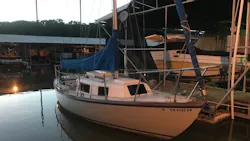
Many years ago my son was provided the opportunity to take over slip payments on an abandoned sailboat. There very few things my son would pass on if offered for free and a sailboat was always a wish of his.
I took his excited call about the “deal.” I asked the basic question: “Does it leak?” I was assured it doesn’t. I then asked about the make, model, and year.
“Dad, it’s a little rough but she’s a well-found boat, she’ll take more than we will. She’s a Sloop, a 1969 O’Day Outlaw.”
I paused “What?!?”
He repeated himself as if our connection was poor. It wasn’t. I heard everything he said, I just didn’t believe it.
“Get it - it’s a barn find,” I told him. He knew instantly what I meant and the value of that boat and quickly arranged the deal.
The O’Day Outlaw, a boating asset that communicates with its sailors – if they know how to listen
I’ve been around water and boats all my life. I grew up on the Connecticut shoreline and lived in Newport Rhode Island, and we now live in Texas. This boat was made in Fall River Massachusetts. That boat saw limited production. To last this long is fascinating, to find its way to a lake in Texas is magic. If this was a car we would call it a “barn find,” one worthy of restoring. And that’s what we did.
The Outlaw sloop (see sidebar below) is what sailors would call lively. It responds quickly, accelerates easily, and communicates what the wind is doing in a way that larger boats often mute. It is not a boat that hides mistakes. If you are out of trim, you feel it. If you are late on a shift, the boat tells you. If you push too hard, it reminds you where the edge is. That is part of its charm.
A sloop is a type of sailboat defined by its single mast and a two-sail configuration, consisting of a mainsail attached behind the mast and a headsail (typically a jib or genoa) attached to the forestay in front of the mast. If you see a sailboat with one mast, one large sail behind it, and one triangular sail in front you are almost certainly looking at a sloop.
What distinguishes a sloop is not size, hull shape, or purpose, but this simple and efficient rigging arrangement. The sloop rig is the most common sailboat configuration in the world because it provides:
- Efficiency: The combination of mainsail and headsail creates an aerodynamic interaction that improves lift and forward drive
- Control: Two primary sails allow for precise balance and trim
- Simplicity: Fewer sails and lines compared to more complex rigs like ketches or schooners
- Versatility: Effective across a wide range of wind conditions and points of sail
The sloop’s significance is not just in its structure, but in how it manages force. The interaction between the mainsail and headsail creates a pressure differential that drives the boat forward while allowing the sailor to balance power and stability.
In that sense, a sloop is less a boat and more a controlled energy system, where wind is captured, shaped, and translated into motion through deliberate configuration and continuous adjustment.
Reliability language on the water, and on the plant floor
There is a moment on a sailboat when everything feels right. The sails are trimmed, the boat is making way, and the helm settles into that quiet balance where the vessel seems to move almost on its own. A sailor might say, “She’s sailing well, tracks true, and feels steady on her feet.”
Anyone who has spent time in a plant knows that same moment. The process is running, throughput is consistent, and nothing appears out of place. The system feels stable. Operators relax. The assumption settles in that the condition will hold.
That is where the language of sailing becomes useful, because sailors do not confuse motion with control, and they do not mistake a quiet system for a safe one.
“Well-Found” vs. “It’s Running” – A seasoned sailor will describe a boat as well-found, meaning it is properly equipped, maintained, and ready for the conditions ahead. It is not just floating and moving; it is prepared.
In plants, we often substitute a different phrase: “It’s running.” Those two statements are not equivalent. A well-found vessel implies that:
- The structure is sound
- The systems are maintained
- The crew understands the equipment.
A running system tells you none of that. Equipment can operate while degraded. Safeguards can exist without being functional. People can be present without being prepared.
A plant that is truly “well-found” is one where reliability has been built into the system, not assumed because output is being achieved.
“Sailing Well” vs. “Making Production” – A boat that sails well is balanced, responsive, and efficient. It does not fight the helm. It does not require constant correction. It moves with intention.
A plant that is making production is often judged the same way, but the comparison can be misleading. I have seen systems that were “making numbers” while operating out of trim, with parameters misaligned and margins reduced. The process was producing, but it was not healthy.
A sailor would recognize that immediately. He would say the boat is moving, but it is not sailing well and that distinction matters.
“In Trim” vs. “Within Limits” – Sailors talk about a boat being in trim, which means the sails are adjusted to match current conditions. This is not a one-time setup. It is a continuous process.
In plants, we tend to rely on the idea of being “within limits,” which suggests that as long as parameters fall inside a predefined range, the system is acceptable. The problem is that limits define boundaries, not optimization.
A system can be within limits and still be out of trim. It can be operating inefficiently, stressing components, or drifting toward instability without crossing any formal threshold. The best operators, like the best sailors, do not aim for acceptable. They aim for aligned.
“Behind the Boat” vs. Reactive Operations – One of the more telling expressions in sailing is “behind the boat.” It describes a situation where the sailor is reacting to what has already happened instead of anticipating what is about to happen. You can feel it when it occurs. The wind shifts, the sails luff, and adjustments come late. Control is not lost immediately, but it begins to erode.
In plants, this is the default mode of operation more often than we would like to admit. Alarms trigger action. Deviations prompt response. The system dictates behavior.
Operating behind the boat is not an occasional condition. It becomes a pattern. Reliability requires moving ahead of the system, recognizing changes early, and acting before the system forces a response.
“Overpowered” vs. Running at the Edge – A sailor will say a boat is overpowered when there is too much sail for the wind conditions. The boat heels excessively, control becomes difficult, and the risk of rounding up or broaching increases.
In a plant, this is the equivalent of operating at or near maximum capacity. The system is pushed for output. Margins shrink. Small disturbances create outsized responses. The system may continue to run, and performance may appear strong, but the stability has been compromised.
The experienced sailor reefs early, reducing sail before control is lost. The experienced operator reduces load or adjusts conditions before instability emerges. Waiting until the system demands correction is often too late.
“Rounding Up” and “Broaching” vs. Process Upsets – When a sailboat rounds up, it turns uncontrollably into the wind. When it broaches, it swings sideways under force, often in heavy conditions. Both are expressions of lost control.
Plants experience their own versions of rounding up and broaching. A process upset, a sudden trip, a cascade of failures, these are not random events. They are the result of forces that were no longer being managed. The system did not fail in an instant. It lost balance, and then it lost control.
“Reef Early” vs. Acting Before Limits – One of the oldest pieces of sailing advice is simple: reef early. Reduce sail area before the wind demands it. It is not about responding to conditions, it’s about anticipating them.
In plants, this principle is rarely followed with the same discipline. Adjustments are often delayed until thresholds are approached or exceeded. Action is taken when there is confirmation of a problem rather than indication of one.
The consequence is predictable. The system crosses into a region where recovery is more difficult and risk is elevated. Acting early preserves margin. Waiting consumes it.
“Out of Trim” vs. Misaligned Systems – A boat that is out of trim is not necessarily in danger, but it is not operating correctly. It may feel sluggish, require constant correction, or fail to point effectively into the wind.
In plants, systems drift out of alignment in similar ways. Parameters shift, components wear, and interactions change. The process continues to run, but efficiency declines and stress increases.
This condition often goes unnoticed because it does not immediately produce failure. However, it is the environment where failure begins.
“Keeping a Weather Eye” vs. Continuous Awareness – Sailors are taught to keep a weather eye, which means maintaining constant awareness of changing conditions. It is not a periodic activity. It is continuous.
In plants, situational awareness is often segmented. Operators focus on their area, their panel, their immediate responsibilities. Broader awareness of system interactions and external influences can be limited.
The most effective operations extend awareness beyond the immediate system. They understand upstream influences, downstream consequences, and external variables. They are not surprised by change because they are watching for it.
“Everything Was Fine” vs. Quiet Drift – After an incident, sailors and operators alike often describe the conditions in the same way: everything was fine. That statement reflects perception, not reality.
A system that appears stable may be experiencing quiet drift, where small deviations accumulate without recognition. The boat remains upright. The plant continues to run. Nothing demands attention. Until something does.
The failure does not begin at that moment. It began earlier, when the system first moved out of alignment and no correction was made.
A successful passage home depends on maintaining command of the system, not just running It
Sailors use language that reflects an understanding of dynamic systems. They speak in terms of balance, trim, power, and awareness because those are the variables that determine whether the system remains under control.
Plants operate under the same principles, even if the language is different. A system that is well-found, in trim, and handled with awareness will perform reliably across a range of conditions. A system that is overpowered, out of trim, or operated behind the boat will eventually reveal those weaknesses.
The goal is not simply to keep the system running. The goal is to remain in command of it. That requires more than procedures. It requires perception, anticipation, and the discipline to act before the system forces you to.
The Outlaw reflects the same principles you apply in reliability. It is:
- Simple, but not simplistic
- Responsive to input
- Transparent in its behavior
- Dependent on the operator’s awareness
It does not rely on complexity to perform, it relies on alignment. That is why boats like this endure. Not because they are perfect, but because they reveal the system clearly enough for a person to understand it.
It is better to adjust your sails than curse the wind...for the wind is aggressively indifferent concerning your direction and well being.

1969 O'Day Outlaw: The sloop with personality
There are boats that are engineered, and then there are boats that carry a kind of personality. The 1969 O’Day Outlaw sits in that second category. It is not the largest, not the fastest, and not the most technically complex, yet it occupies a space in sailing culture that feels larger than its dimensions.
To understand why, you have to start with the man behind it. George O’Day was not a marketer who discovered sailing. He was a sailor who understood what most people needed from a boat. He won a gold medal in sailing at the 1960 Summer Olympics in the Star class, which matters for one reason: he understood balance, feel, and control at the highest level. He knew what a boat should feel like, not just how it should be built.
When he founded O’Day Corporation, his focus was not on elite racers or luxury yachts. He aimed squarely at accessibility. He built boats that ordinary people could sail, understand, and trust. That philosophy shaped everything that followed, including the Outlaw sloop.
Many sailors describe boats like the Outlaw as forgiving, but honest. It will not punish small errors harshly, but it will not mask them either. You learn quickly because the feedback is immediate.
About the Author
Michael D. Holloway
5th Order Industry
Michael D. Holloway is President of 5th Order Industry which provides training, failure analysis, and designed experiments. He has 40 years' experience in industry starting with research and product development for Olin Chemical and WR Grace, Rohm & Haas, GE Plastics, and reliability engineering and analysis for NCH, ALS, and SGS. He is a subject matter expert in Tribology, oil and failure analysis, reliability engineering, and designed experiments for science and engineering. He holds 16 professional certifications, a patent, a MS Polymer Engineering, BS Chemistry, BA Philosophy, authored 12 books, contributed to several others, cited in over 1000 manuscripts and several hundred master’s theses and doctoral dissertations.