Maintenance Mindset: What recent lubricant acquisitions reveal about the future of reliability
Key Highlights
- Lubricants are shifting from consumables to strategic assets tied to reliability, performance, and measurable outcomes.
- Consolidation is creating three layers: global brands, specialty performance firms, and distribution networks shaping supply and service.
- Suppliers are becoming reliability partners; plants must focus on failure costs and performance impact, not just lubricant price.
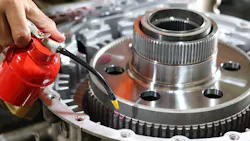
In most plants, lubricants are still treated like consumables. Ordered, stored, applied, and eventually replaced. They sit on shelves, show up on PM routes, and get discussed when something goes wrong.
But if you look at what has happened in the lubricant industry over the past 24 months, a different story begins to take shape. Lubricants are no longer being treated as consumables. They are being treated as strategic assets.
When capital starts moving, it rarely moves without reason.
A lubrication market in motion – key acquisitions over the past two years
Several acquisitions across the industrial and automotive lubricant sectors point to a quiet but meaningful restructuring of the industry. One of the largest signals came when BP agreed to sell a 65% stake in Castrol to infrastructure investor Stonepeak, placing the business at a valuation approaching $10 billion. That is not a routine divestment – that is a repositioning of a global lubricant brand as a long-term cash-generating platform.
At the same time, Lubrication Engineers expanded its reach into the high-performance synthetic space through the acquisition of Royal Purple’s industrial product lines. In a related move, Lubrication Engineers also acquired RSC Bio Solutions, bringing biodegradable and environmentally acceptable lubricants into its portfolio and aligning with increasingly regulated markets such as marine and sensitive environmental applications.
HF Sinclair added Industrial Oils Unlimited to its lubricants and specialties business, strengthening its regional blending and supply position. BECHEM expanded its North American footprint through the acquisition of CLC Lubricants, reinforcing its presence in industrial fluids and metalworking applications.
On the sustainability front, TotalEnergies acquired Tecoil, a company focused on re-refining used lubricants, signaling a continued push toward circular economy models and lifecycle management of base oils.
Meanwhile, a steady stream of distribution-driven acquisitions continued in the background. RelaDyne acquired Ocean State Oil. Cadence Petroleum Group acquired BOC Oil. U.S. Lubricants expanded through multiple regional additions. These moves may not carry the same headline value, but they shape how lubricants actually reach the plant floor.
Individually, each of these transactions can be explained. Together, they form a pattern.
The signal beneath the surface of the industry organizing itself
What we are seeing is not random consolidation. The lubricant industry is organizing into three distinct layers.
At the top, large global brands are being treated as financial platforms. Castrol is the clearest example. These businesses are valued for their stability, global reach, and predictable demand. They are no longer just chemical companies. They are infrastructure assets.
In the middle, specialty and performance-focused companies are consolidating capabilities. The acquisitions by Lubrication Engineers are a good example. This is where technical differentiation still matters. Performance, reliability, and application knowledge drive value.
At the ground level, distribution is being quietly assembled into regional and national networks. Companies like RelaDyne and Cadence are building density, logistics efficiency, and customer proximity. This is where availability, service, and response time are controlled.
Each layer serves a different purpose, but together they define how lubricants are developed, positioned, and delivered.
But if you look closely at all of these acquisitions, there is something just as important in what is missing.
We see consolidation in distribution. We see consolidation in brands. We see expansion into sustainability and specialty performance.
What we do not yet see, at least not at scale, is consolidation around fundamentally new ways of manufacturing lubricants. That matters because historically, the companies that change how something is made eventually change how it is valued, how it is sold, and how it is used. That shift has not fully played out yet in lubrication.
What lubrication market shifts mean for your plant
From inside a plant, it is easy to miss these shifts. The drum still shows up. The grease still gets applied. The PM still gets completed but the forces behind those products are changing.
But tubricants are increasingly tied to broader systems that include supply chain integration, technical services, and performance expectations. The supplier you choose is no longer just a product provider. They are part of your reliability strategy, whether you intend that or not.
At the same time, the gap between commodity lubrication and performance lubrication continues to widen. The acquisition activity in the specialty space makes that clear. Growth is not occurring in cheaper products. It is occurring in products and systems that can demonstrate measurable improvements in equipment life, maintenance intervals, and operating efficiency.
The most important shift, however, is this: industry is no longer selling grease, it is selling outcomes.
Lubricants are moving from consumables to platforms. Reliability is becoming the product and the companies being acquired are not the ones selling the lowest price, they are the ones that can demonstrate performance. For plant professionals, the implication is straightforward.
Acquisitions are often viewed as financial events. In reality, they are directional indicators. They show where confidence exists, where capital is flowing, and where the industry believes value will be created. Right now, those signals are clear.
Stop asking what lubrication costs.
Start asking what failure costs.
Because in the end, that is the number the market is organizing itself around.
About the Author
Michael D. Holloway
5th Order Industry
Michael D. Holloway is President of 5th Order Industry which provides training, failure analysis, and designed experiments. He has 40 years' experience in industry starting with research and product development for Olin Chemical and WR Grace, Rohm & Haas, GE Plastics, and reliability engineering and analysis for NCH, ALS, and SGS. He is a subject matter expert in Tribology, oil and failure analysis, reliability engineering, and designed experiments for science and engineering. He holds 16 professional certifications, a patent, a MS Polymer Engineering, BS Chemistry, BA Philosophy, authored 12 books, contributed to several others, cited in over 1000 manuscripts and several hundred master’s theses and doctoral dissertations.