Trump's emergency tariffs ruled to be illegal
Key Highlights
- The Supreme Court decision limits the President's ability to impose tariffs without congressional approval.
- Most tariffs enacted by Trump since last year are affected, except those on steel and aluminum from his first term.
- Chief Justice Roberts emphasized that IEEPA does not authorize tariffs, reinforcing constitutional boundaries.
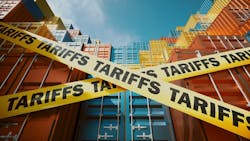
In a 6–3 decision today, the U.S. Supreme Court ruled that tariffs require clear, explicit authorization from Congress, and that the sweeping global tariffs levied by President Trump under the International Emergency Economic Powers Act (IEEPA) are illegal.
“The president asserts the extraordinary power to unilaterally impose tariffs of unlimited amount, duration, and scope. In light of the breadth, history, and constitutional context of that asserted authority, he must identify clear congressional authorization to exercise it,” Robert wrote for the court.
The ruling impacts most of the tariffs Trump has enacted since last year, but not fees on steel and aluminum imports that he enacted in his first term and former President Joe Biden continued.
Tariffs that are impacted by this decision include:
-
Drug-trafficking tariffs: 25% on most Canada/Mexico imports, 10% on most China imports incuding 20% on drugs from China
-
“Reciprocal” tariffs: ≥10% on all imports, with dozens of nations facing higher rates and with some carve‑outs.
Some manufacturers have been anticipating this ruling, and have been quietly hiring lawyers or submitting official claims to the U.S. government in an early effort to secure a tariff refund.
The court did not prescribe a refund process, and it is anticipated that guidance will be forthcoming from the Treasury department over timing, eligibility, documentation, as refunds could reach billions of dollars.
Industry Reactions
Rosemary Coates, Executive Director of the Reshoring Institute, says:
The Supreme Court’s ruling is the legal interpretation of the President’s authority to collect taxes (tariffs) under IEEPA. But it is up to the lower courts, specifically the Court of International Trade, to determine what happens next, including a process for refunds. So any actual changes in global supply chains as a result of the Supreme Court ruling will come later.
There is no question that the Trump Administration tariffs have been a considerable burden on US businesses that import finished goods, parts, and raw materials, and on US consumers experiencing higher prices. The collective “sigh of relief” after this ruling, was nearly audible in the business community. Manufacturing jobs growth in 2026 was lower than in 2025. The intended effect of the tariffs to drive manufacturing home, just never materialized.
But behind the scenes, companies have been planning, rethinking their global manufacturing strategies, and assessing the geopolitical risks brought on by the tariffs. The companies we work with at the Reshoring Institute tell us they would prefer to make products in America if they could make the economics work. Those that have high labor content in their products are considering low-cost alternative countries to China, such as Vietnam, India, and Mexico. If production can be automated through the use of robotics, advanced machine tools, and 3D printing, then there is a better chance of making the economic case for manufacturing in the US. Unfortunately, that means fewer jobs than we had hoped for.
Anyway that you look at it, the tariffs have been bad for businesses, bad for consumers, and will have lasting effects on our global trading partners’ relationships.
National Association of Manufacturers President and CEO Jay Timmons and Rockwell Automation Chairman and CEO and NAM Board Chair Blake Moret said, in a joint statement, that the decision "underscores the importance of clarity and durability in U.S. trade policy":
Manufacturers rely on stability to plan investments, grow operations and create jobs. Ongoing legal and policy uncertainty makes it more difficult to make the long-term decisions that drive American competitiveness.
Now is the time for policymakers to work together to provide a clear and consistent framework for trade, one that strengthens domestic manufacturing, secures supply chains for critical inputs, empowers the administration to negotiate strong trade deals and ensures manufacturers can access the materials and components they need to grow, compete and create jobs in America and the export markets they need to sell U.S.-made goods around the world. If tariffs are utilized as a tool, they should be targeted to countries engaged in specific unfair trade practices, particularly by nonmarket economies.
We share the president’s goal of ushering in the greatest manufacturing era in American history, and clear, durable trade policies will help manufacturers deliver on that promise. Strengthening supply chain resilience will ensure manufacturers can expand production, compete globally and power economic growth here at home.
The NAM will continue working with leaders in Congress and the administration to advance durable solutions that support manufacturers, strengthen America’s industrial base and benefit the millions of Americans who depend on a strong manufacturing economy.
- What’s next for Trump’s tariffs, and how quickly will manufacturers feel the effects? In early 2025, Plant Services managing editor Anna Townshend outlined the potential levers available to Trump for his planned tariffs, including what might be available to his administration beyond the IEEPA.
More tariff coverage
Several of Plant Services parent company EndeavorB2B's brands are writing about the Supreme Court ruling. For more information, read:
- Supreme Court Strikes Down Most Trump Tariffs: IndustryWeek's Robert Schoenberger summarizes key ruling details and their impact across U.S. manufacturing.
- Supreme Court strikes down Trump-era tariffs, raising implications for infrastructure costs: Wastewater Digest's Alex Cossin notes that the ruling had been closely watched by infrastructure groups as tariff costs impacted the price tags on big civic projects.
- Supreme Court hands Trump tariffs plan a setback: T&D World's Jeff Postelwait breaks down which justices voted with the majority and which dissented.
- Tariffs Struck Down by Supreme Court: MH&L's Adrienne Selko captures comments from the National Retail Foundation and National Association of Wholesale Distributors.
- Supreme Court Strips Trump's Emergency Tariff Authority: Chemical Processing's Traci Purdum details next steps for chemical producers.
About the Author
 Thomas Wilk
Thomas Wilk
editor in chief
Thomas Wilk joined Plant Services as editor in chief in 2014. Previously, Wilk was content strategist / mobile media manager at Panduit. Prior to Panduit, Tom was lead editor for Battelle Memorial Institute's Environmental Restoration team, and taught business and technical writing at Ohio State University for eight years. Tom holds a BA from the University of Illinois and an MA from Ohio State University