Compressor fluid performance can protect equipment, efficiency and maintenance budgets
Key Highlights
- Using the right lubricant reduces wear, dissipates heat effectively and maintains optimal sealing and efficiency of compressor components.
- Regular oil sampling helps detect early signs of fluid degradation, preventing costly repairs and unplanned downtime.
- High-quality fluids with proper viscosity and additives contribute to energy savings and environmental sustainability by reducing waste and emissions.
- Emerging IoT technology will enable real-time monitoring of fluid health, allowing for predictive maintenance and automated fluid management.
I learned a costly lesson while servicing my last riding lawnmower. I decided to skip the recommended maintenance parts and fluids for cheaper generic ones found on the internet. “The description says it’s the same,” I thought with a shrug. Three years later in the hot July heat, the engine seized. The savings? A trivial $100 over the three years. The cost? More than $4,000 for a new lawnmower.
That moment stuck with me—not just as a cautionary tale for lawnmower maintenance, but as a reminder of how critical it is to use the correct parts and fluids for the jobs too. In various environments, air compressors are often the unsung heroes powering everything from assembly lines to roller coasters. And much like that lawnmower, their performance and reliability hinge on something easily overlooked: fluid health.
From energy efficiency and sustainability to long-term reliability and forward-looking innovations, the importance of using the right fluids, specifically OEM-recommended lubricants, in air compressors is the key to keeping operations running smoothly and economically.
OEM fluids are engineered for the compressor
Think of your air compressor as a high-performance athlete. You wouldn’t hydrate a marathon runner with soft drinks, and you shouldn’t run a precision machine with the wrong lubricant.
Original equipment manufacturer (OEM) fluids are engineered to maximize performance and protect critical compressor components. The development of OEM fluids involves both a controlled laboratory environment and real-world field testing to ensure consistency throughout a variety of operating conditions. Data is collected by closely monitoring the fluid’s condition during testing. The data is then analyzed and provides evidence of the performance recommendations set by the OEM, such as machine life expectancy and fluid maintenance intervals.
Using OEM fluids offers three major advantages:
- Extended equipment life: Tailored for reliability, OEM fluids reduce wear and tear on critical internal components. This helps extend the service life of the compressor, delaying costly replacements or overhauls.
- Superior cost savings: While OEM fluids might carry a slightly higher upfront price, they pay dividends over time. Improved performance, fewer breakdowns and longer service intervals result in lower total cost of ownership.
- Peace of mind: Just like using the right oil in your lawnmower, OEM fluids are a vote of confidence. You know your machine is running with what it was engineered to use.
Using generic fluids might feel like a smart way to save money, but it’s a risk. And unlike other pieces of machinery, where you might hear knocking before catastrophe, an air compressor doesn’t always give such generous warnings.
What does compressor fluid actually do?
Compressor fluid plays a central role in the operation of oil flooded rotary screw compressors. The main functions of the compressor fluid include lubricating moving parts, dissipating heat, controlling contaminants, and sealing the rotor clearances for compression efficiency.
- Lubrication—Compressor fluid forms a film on the surfaces of moving metal components, such as bearings and rotors. This film stops metal to metal contact preventing premature component wear. Premature bearing and rotor wear will shorten the life of these components and create significant repair costs.
- Heat Dissipation—Mechanically compressing air generates a significant amount of heat. Compressor fluid helps absorb the heat generated by the compression process. The fluid then carries this heat away from the internal components, helping to keep the machine from overheating.
- Compression efficiency—In rotary screw compressors, the compressor fluid creates a tight seal around the rotors. This helps keep the compressor running at maximum efficiency by stopping air from leaking past the screws, which would force the compressor to work harder to deliver the same pressure.
- Controlling contaminants—Contaminants are difficult to prevent. Dirt, dust and moisture are the most common contaminants found in a compressor. Compressor fluid helps trap the contaminants and carries them to a filter or sump so they can be removed without causing harm.
Fluid quality affects compressor efficiency
There’s a direct relationship between fluid quality and compressor efficiency. Top-tier fluids reduce internal friction and operating temperatures, allowing machines to function more effectively with less energy.
High-quality fluids form a consistent lubricating film between moving parts, reducing mechanical resistance and dissipating heat more effectively. Optimal viscosity is also something to consider. The right viscosity helps maintain flow even under varying loads and temperatures. This allows compressors to consume less power, especially during peak operations.
Imagine two compressors, identical in make and model, but one uses high-grade OEM fluid while the other runs on a generic substitute. Over time, the OEM-lubricated unit will run cooler, consume less electricity and require fewer maintenance stops.
Fluid health also affects sustainability
Fluid health is also about environmental responsibility. Maintenance engineers are beginning to recognize the importance of the fluid and its role in promoting efficient operations. Today’s synthetic OEM fluids offer longer fluid life so less waste is generated over time, and fewer oil changes help reduce environmental impact. They are formulated with additives that lower environmental impact without sacrificing fluid performance. Some OEM fluids can be biodegradable or made from renewable raw materials.
From an efficiency standpoint, high-quality lubricants reduce friction and wear, which translates to less energy loss during operation. Maintaining stable viscosity helps ensure compressors run at optimal power consumption levels. Low carryover also reduces the frequency and volume of oil top-offs needed to keep the system running smoothly. For instance, polyalphaolefin (PAO) fluids may require three to four times more top-off than polyglycol-based alternatives, resulting in higher fluid costs and greater downstream impact. Fluids with a high flash point further enhance safety and help maintain stability under stress.
Sampling ensures fluid health reliability
Most compressors do not operate in controlled environments. OEM compressor fluids are engineered to deliver reliable performance in a variety of operating conditions. Fluid performance is affected by several factors including duty cycles, industries, plant conditions, applications, operating hours and other conditions. Preventive maintenance programs including oil sampling can serve as an early warning system. An oil sample report can tell you if your lubricant is still doing its job or if contaminants and oxidation are threatening your compressor.
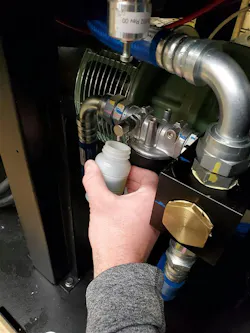
Oil sampling typically measures the following:
- Viscosity changes indicate thermal breakdown or contamination.
- Oxidation and acidity reflect fluid degradation over time.
- Wear metals point to internal wear of critical components.
- Water content is a sign of moisture ingress or condensation buildup.
Catching these issues early can help prevent unwanted compressor downtime. For example, if you ignore recurring high acid warnings in oil sample reports, weeks later, the compressor could seize during peak production, halting operations for days. The fix? Thousands of dollars in parts and labor, in addition to lost revenue. The cause? Degraded fluid clogged the internal passages, causing air end failure from lack of lubrication.
Fluid viscosity is #1
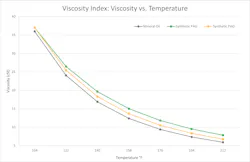
Viscosity, or the resistance to flow, is the single most important characteristic of a lubricating fluid. The viscosity of a fluid determines the thickness of the protective layer between moving metal parts. It also minimizes friction and wear and determines the overall life of the machine. If the viscosity is too low, the protective lubricant layer becomes too thin and metal surfaces begin touching, causing rapid wear and damage. If the viscosity is too high, the friction of moving parts increases, causing the compressor to work harder and use more energy, wasting money. A performance characteristic OEMs focus on when selecting a synthetic base oil is viscosity index.
OEM fluids are formulated with this balance in mind. They help compressors:
- run cooler by reducing internal resistance
- operate longer between maintenance intervals
- protect against rust, corrosion, and varnish formation.
Varnish is a warning sign of fluid degradation
Low-quality generic lubricants, on the other hand, have telltale signs. An experienced technician can quickly identify the effects of a low-quality fluid, such as plaque-like varnish coating internal parts, sludge that clogs internal oil passageways, or vibrations that can be felt or heard. Varnish forms when a low-quality fluid is stressed. If fluid overheats due to an unexpected duty cycle or a hot and humid environment, the fluid begins to rapidly oxidize. The oil oxidation process forms polar insoluble solids that stick to all metal surfaces. Once varnish sets in, performance of the compressor significantly declines, and the cleanup becomes imminent and costly. Common signs of varnish include:
- sluggish operation
- increased bearing temperatures
- premature air end failure
- increased power draw.
One more consideration in support of using OEM fluid: Using non-approved lubricants or neglecting fluid health can also void equipment warranties. Most OEMs require documentation of oil sampling and adherence to recommended maintenance intervals to maintain warranty coverage. Failing to comply puts both your equipment and your financial investment at risk.
Fluid choices can affect warranty coverage
The next frontier in air compressor fluid health is already arriving. Fluid condition monitoring sensors that provide real-time data enable operators to make decisions in hours instead of days. Just as today’s cars alert you when your oil is low or degraded, tomorrow’s compressors will constantly analyze fluid condition—measuring viscosity, temperature, water content and even wear particles.
IoT-enabled oil sensors are already used in industrial applications. Air compressor manufacturers are rapidly developing smart systems to bring that same predictive capability to the factory floor. In five years or fewer, we could see predictive maintenance driven by AI analysis of fluid condition trends. Another future function is automated oil change alerts that are tailored to actual usage and conditions rather than time intervals.
Fluid health is a reliability investment
Just like clean, high-quality oil is essential to a car’s engine, premium OEM compressor fluid is the heartbeat of a healthy, high-performing rotary screw air compressor.
From improving efficiency and reducing energy costs, to extending equipment life and avoiding catastrophic failure, the case for investing in proper fluid health is strong. The next time you’re tempted to save a few bucks with an off-brand lubricant, ask yourself, is it really worth the risk?
About the Author
Cody Leatherman
Cody Leatherman is global product manager of lubricants and consumables at Hitachi Global Air Power, where he is responsible for lubricant and filter product lines. Leatherman spent 11 years in the lubricant industry in numerous positions. He holds a Bachelor of Science degree in Chemistry from Wabash College and a Master of Business Administration from Indiana State University. Leatherman resides with his family in Indianapolis, Indiana.